The search landscape is rapidly evolving, and Answer Engine Optimization (AEO) is taking center stage as we approach the end of 2025. With AI becoming integrated into search experiences, the days of simply ranking for keywords are fading. Today’s content needs to be primed for AI-driven answers, voice search, and zero-click experiences. Let’s explore the most effective AEO content prioritization methods for 2025 and the trends shaping this new search frontier.
Top AEO content prioritization methods to adopt in 2025
Use natural language processing SEO for topical depth
Natural Language Processing (NLP) is revolutionizing how search engines understand content. In 2025, successful strategies will leverage NLP to build topical depth rather than keyword density.
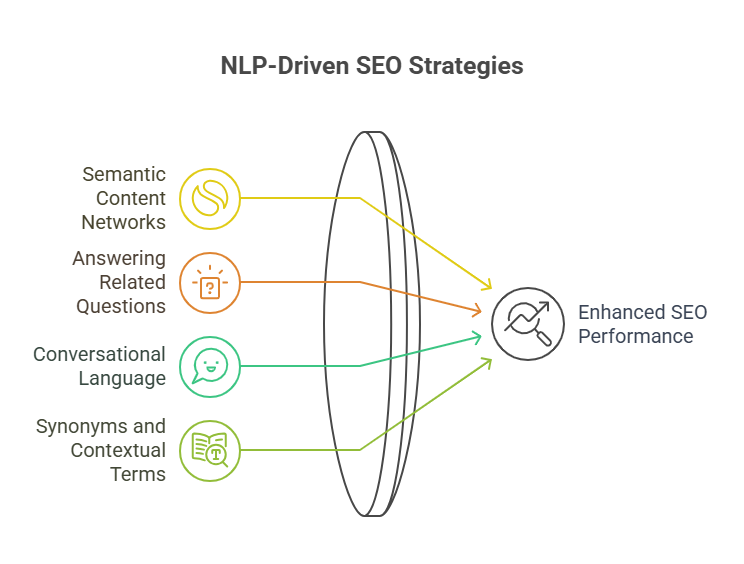
To implement NLP-driven SEO:
- Build semantic content networks with interconnected topics
- Answer related questions within your content
- Use natural language that flows conversationally
- Incorporate synonyms and contextual terms
AI systems now recognize when content thoroughly covers a topic versus simply including targeted keywords.
Map user intent with conversational search strategy shifts
The traditional keyword → results → click journey is being replaced by conversational, intent-driven interactions. With platforms like Google’s SGE, ChatGPT, and voice-first assistants, users expect direct answers.
AI-powered search experiences are reshaping discovery patterns. Entity-First SEO emphasizes building content around recognized entities to strengthen semantic authority.
This shift demands a more nuanced approach:
- Structure content as direct answers to specific questions
- Organize information in a conversational flow
- Consider various ways users might phrase queries
Brands that fail to adapt risk disappearing entirely, while those who embrace AEO can become trusted voices in an AI-dominated landscape.
Apply E-E-A-T content guidelines for on-SERP credibility
Experience, Expertise, Authoritativeness, and Trustworthiness (E-E-A-T) have evolved from ranking factors to essential credibility signals for AI systems.
To prioritize E-E-A-T:
- Showcase author expertise with detailed credentials
- Include first-hand experience and original insights
- Back claims with authoritative sources
- Update content regularly for ongoing relevance
Trends shaping AEO and user behavior in 2025
AI is pushing predictive and intent-based content delivery
AI isn’t just changing how we search but anticipating what we’ll search for next. Predictive content delivery is becoming the norm, with AI systems serving information before users complete their queries.
Key approaches:
- Develop content addressing the complete user journey
- Create modular content served in bite-sized answers
- Consider multiple intents behind similar queries
Zero-click searches need more structured, query-anchored data
With zero-click searches rising, structured data has become essential. Users ask Alexa, Siri, and Google Assistant for instant answers which rarely come from traditional search listings.
To optimize for zero-click environments:
- Implement schema markup (FAQ, HowTo, Product)
- Create content for featured snippets
- Use clear, concise answers to common questions
SERP UX changes are redefining how prioritized content is surfaced
Search result pages are evolving, with AI-powered conversational search delivering summaries instead of ranking links. To optimize visibility, align with AI-native understanding, focusing on context and meaning rather than keywords.
Unlike SEO, which focuses on ranking and clicks, AEO prioritizes visibility within AI-driven experiences, which may not always result in direct site visits.
Adapting requires:
- Structured data markup
- Answer-first content design
- Blending traditional SEO with AEO strategies
Conclusion
As we move toward 2026, AEO content prioritization will be essential for visibility in an increasingly AI-driven search landscape. By embracing natural language processing, mapping user intent with conversational strategies, and adhering to E-E-A-T guidelines, content creators can stay ahead of the curve. The future belongs to those who can effectively communicate with both humans and AI creating content that’s findable, useful, and trustworthy regardless of how it’s accessed.
FAQs
How is AEO content prioritization evolving with NLP in 2025?
AEO with NLP is evolving from keyword-focused approaches to context-rich content strategies. In 2025, NLP algorithms better understand nuanced language, requiring comprehensive topic coverage rather than keyword targeting. Content creators should develop topic clusters that showcase expertise and incorporate conversational language that AI systems can easily parse.
What role do E-E-A-T content guidelines play in AEO value scoring?
E-E-A-T guidelines are central to how AI systems evaluate content for answer selection. Demonstrable expertise and experience are weighted heavily as AI prioritizes trustworthy sources. Businesses should invest in genuine expertise, fact-checking processes, and transparent attribution to maximize visibility in AI-generated answers.
How should user intent mapping techniques change in 2025?
User intent mapping must evolve beyond basic categories to accommodate conversational and multi-step search journeys. Effective mapping should account for question sequences, where one query leads to follow-ups. Content should address not just primary questions but subsequent clarifications. The most successful content will guide users through complex topics while providing clear answers at each step.

Ridam Khare is an SEO strategist with 7+ years of experience specializing in AI-driven content creation. He helps businesses scale high-quality blogs that rank, engage, and convert.