
Conducting an effective SEO audit for B2B websites requires a strategic approach that considers the unique challenges of enterprise-level sites. From complex product catalogs and long sales cycles to multi-stakeholder decision processes, B2B websites need specialized attention. Unlike consumer-focused sites, B2B platforms often contain vast resource libraries, intricate product relationships, and specialized conversion funnels that demand a different audit methodology. In this guide, we’ll walk through a systematic process for conducting a B2B SEO audit that uncovers critical issues affecting your site’s performance and provides a clear path to optimization that aligns with your business objectives.
Start your B2B SEO audit with data crawl
Use enterprise SEO audit tools smartly
Standard SEO tools often reach their limits when analyzing large B2B websites. Invest in enterprise-grade solutions like Screaming Frog with higher crawl limits, DeepCrawl, or Botify for comprehensive coverage. But don’t just run default scans. Configure your crawls strategically by setting custom extractions for industry-specific schema and business-critical elements. Segment your crawl data by business units, product categories, or customer journey stages to make insights more actionable for different teams. Smart tool configuration saves hours of manual work later and ensures you capture the data points most relevant to your B2B marketing goals.
Crawl your full site for indexability
B2B websites typically contain thousands of pages across product catalogs, solution libraries, and resource centers. Start by reviewing your XML sitemaps to ensure they’re complete and properly formatted. Check that Google can access your most valuable content, including technical whitepapers, comparison charts, and specification pages that B2B buyers frequently search for. Look for robot.txt directives that might accidentally block important sections, especially in document repositories or client portals. Pay close attention to pages with URL parameters, filtered views, and dynamically generated content that commonly cause indexing problems in large B2B sites.
Spot broken links and orphaned pages
Broken links and orphaned pages are particularly problematic for B2B websites because they often contain high-value content critical to conversion. Identify broken pathways in key conversion funnels that might prevent prospects from reaching decision-making content. Look beyond basic 404 errors to find soft 404s or pages that load but contain no valuable content. For orphaned pages, cross-check your analytics data with crawl results to discover high-performing content that lacks proper internal linking. This issue frequently occurs after site redesigns, product launches, or when multiple departments manage different sections of your website without coordination.
Fix technical issues from your audit crawl
Resolve duplicate content quickly
Duplicate content is common on B2B websites where similar product information appears across category pages, industry verticals, and solution sections. This confuses search engines about which version to rank. Identify instances where identical or nearly identical content appears across multiple URLs without proper canonical tags. Watch for duplication created by URL parameters in product configurators or filtering systems. For global B2B companies, check for content duplicated across regional domains or language variants. Implementing a consistent canonicalization strategy and consolidating fragmented content can significantly improve how search engines understand and rank your core offerings.
Fix core site speed blockers
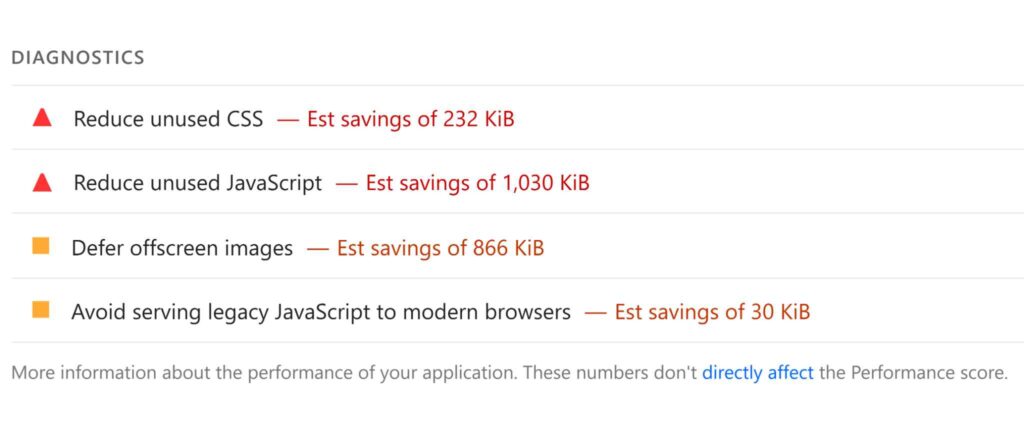
Site speed directly impacts both search rankings and B2B conversion rates. Identify the biggest speed blockers affecting your most valuable pages. Large B2B sites often suffer from:
- Bloated JavaScript libraries across product pages
- Unoptimized images in case studies and product catalogs
- Multiple third-party scripts for analytics, marketing automation, and CRM integration
Prioritize optimizing server response times for high-value pages like product specifications, pricing tables, and ROI calculators that prospects use when nearing purchase decisions. For global companies, consider implementing a CDN to improve loading times in regions where you’re actively expanding.
Correct crawl depth and URL structure
Many B2B websites bury valuable content too deep in their site architecture. Map how many clicks it takes to reach key conversion pages from your homepage and main entry points. Restructure navigation and internal linking to ensure important product pages and lead-generating content are within 3-4 clicks from entry points. Simplify URL structures to create logical hierarchies that reflect how B2B buyers search and navigate. For example, /solutions/industry/product/ is more intuitive than long, parameter-heavy URLs. Implement proper breadcrumb navigation to help both users and search engines understand content relationships, particularly important for complex product ecosystems.
Check Canonicals, Noindex and Redirects
B2B websites typically grow through acquisitions, product launches, and content expansions, leading to technical directive inconsistencies. Verify that canonical tags correctly point to preferred versions of content, especially across product variations or regional adaptations. Review your noindex directives to ensure they’re not blocking valuable content like specification sheets or comparison tools that B2B researchers rely on. Audit redirect chains, particularly after site migrations or rebrands, to eliminate multi-step redirects that slow down both users and crawlers. Pay special attention to downloadable resources and technical documents that frequently break during site updates but remain crucial for B2B lead generation.
Review mobile usability and Core Web Vitals
While B2B purchasing decisions often happen on desktop devices, initial research increasingly occurs on mobile. Verify that all key pages provide good mobile experiences, including properly formatted tables, forms, and technical specifications. Core Web Vitals metrics now directly affect search rankings, so identify pages with poor scores that could be limiting your visibility. Pay close attention to interactive elements like ROI calculators and product configurators that B2B buyers use but might perform poorly on smaller screens. Create a prioritized list of fixes based on page importance and current performance scores to maximize impact on both user experience and search rankings.
Map your SEO audit insights to B2B goals
Cross-check SEO metrics with funnel stages
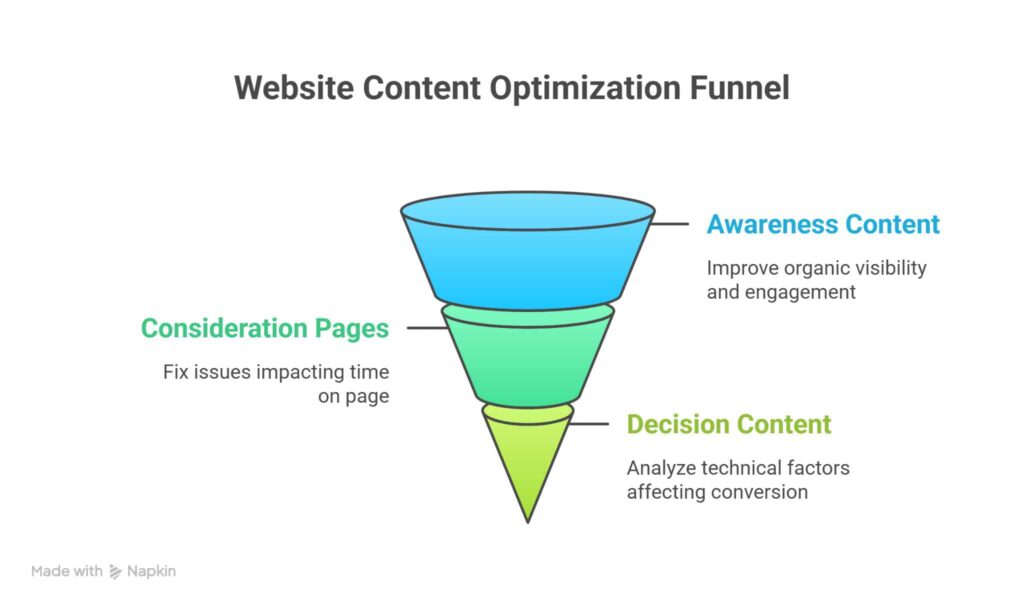
The true value of a B2B SEO audit comes from connecting technical findings to business outcomes. Map each section of your website to specific stages in your sales funnel:
- For awareness content, focus on improving organic visibility and engagement metrics
- For consideration-stage pages like case studies, prioritize fixing issues that impact time on page
- For decision-stage content like pricing pages, analyze how technical factors affect conversion rates
Create a matrix showing which SEO improvements will most directly impact key performance indicators at each funnel stage. This helps prioritize fixes that drive business results rather than just technical perfection.
Ensure buyer pages align with user journey
B2B purchases involve multiple stakeholders with different information needs. Your audit should verify that your content strategy and technical implementation support these diverse journeys. Check that pages targeting technical evaluators have appropriate schema markup and technical details easily accessible to search engines. Verify that content for economic buyers highlights ROI and business value propositions with clear CTAs. Look for gaps where certain buyer roles lack properly optimized landing pages or resources. Create a roadmap for developing and optimizing content that fills these gaps, ensuring each stakeholder finds relevant, discoverable content throughout their journey.
Track lead volume by content clusters
Group your content into topical clusters around core business offerings, then analyze how technical SEO issues affect lead generation within each cluster. Identify content groups where fixing indexation, speed, or structured data issues could significantly improve conversion opportunities. Implement tracking that attributes leads to specific content clusters rather than just individual pages, giving you better insight into how your content ecosystem performs collectively. This approach helps prioritize SEO fixes based on potential revenue impact rather than just traffic metrics, aligning your B2B SEO audit work directly with business outcomes.
Execute your enterprise SEO audit findings
A thorough B2B SEO audit is just the beginning. The real value comes from systematic implementation of your findings. Create a prioritized roadmap based on business impact, not just technical severity. Work with cross-functional teams including IT, content, and marketing to ensure sustainable improvements. Set up ongoing monitoring to prevent regression and capture new opportunities. By connecting your SEO audit to concrete business outcomes and methodically implementing fixes, you’ll transform your large-scale B2B website into a powerful, search-optimized lead generation engine that supports your entire sales funnel and drives measurable business results.
FAQs
How often should I perform a B2B SEO audit?
Conduct comprehensive B2B SEO audits quarterly for large websites. Implement continuous monitoring for critical technical aspects like indexation and core web vitals. After major site updates, product launches, or migrations, run targeted audits focused specifically on the affected sections to catch issues early.
What tools are best for an enterprise SEO audit?
Enterprise-level tools like Botify, DeepCrawl, and Screaming Frog with higher crawl limits handle large-scale websites effectively. Supplement these with specialized tools like ContentKing for real-time monitoring, SEMrush or Ahrefs for competitive analysis, and Google Search Console for direct search performance insights.
How is a B2B technical SEO checklist different from B2C?
B2B technical SEO checklists focus more on supporting complex buying journeys, optimizing resource libraries and technical documentation, ensuring proper indexation of gated content, and structuring data for industry-specific schema. They also pay special attention to conversion paths across longer sales cycles and multiple decision-makers.
Can B2B SEO services help in scaling website audits?
Specialized B2B SEO services bring industry expertise that generic providers may lack. They understand the unique challenges of enterprise websites, complex product offerings, and B2B conversion funnels. External partners can provide objective assessments, specialized tools, and implementation resources to scale audit processes more efficiently than in-house teams alone.
Which content formats work best after an SEO audit?
After completing your audit, prioritize updating high-conversion assets like case studies, comparison pages, and technical specification sheets. Interactive content such as ROI calculators and product configurators typically benefit most from technical SEO improvements. Also focus on pillar content that anchors your topical clusters, as these pages often drive the most qualified traffic when properly optimized.

Ridam Khare is an SEO strategist with 7+ years of experience specializing in AI-driven content creation. He helps businesses scale high-quality blogs that rank, engage, and convert.