

Health and fitness blog writing has grown tremendously as more people look for reliable information to improve their wellbeing. With so many fitness blogs competing for attention, how do you create content that truly connects with readers? Success comes down to strategy, understanding your audience, and delivering quality content. A good health blog balances expert advice with personal stories, giving readers practical tips they can use right away. Ready to build a fitness blog that stands out? Let’s jump into the strategies that will help you create content your readers will love.
Build a content strategy for your blog
Choose fitness or health as your niche
While “health and fitness” might seem specific enough, successful blogs typically narrow their focus. Consider specializing in yoga for beginners, nutrition for runners, strength training for women, or mental wellness practices. A targeted niche helps you stand out and become recognized as an authority. Look at your personal expertise, passions, and market gaps when selecting where to focus your health blog writing efforts.
Define your ideal reader persona
Who exactly are you writing for? Create a detailed profile of your ideal reader – their age, fitness level, goals, and challenges. Are they busy parents seeking quick workouts? Office workers battling sedentary lifestyles? College students on tight budgets? Understanding your reader helps you craft content that speaks directly to their needs, making your blog instantly more valuable and relevant.
Great marketing means knowing your audience, talking to your target personas, and building your content strategy around them.
– Rocío Arrarte, EMEA senior marketing manager at Diligent
Map out blog categories and themes
Organize your content into logical categories that become your content pillars. For example:
- Workout routines and training plans
- Nutrition guidance and recipes
- Recovery techniques and injury prevention
- Mental wellness and motivation
- Product reviews and gear recommendations
Within each category, brainstorm specific topics that would interest readers at different stages of their fitness journey.
Set a consistent publishing schedule
Consistency builds trust with both readers and search engines. Decide how frequently you can realistically publish quality content – whether that’s weekly, bi-weekly, or monthly. It’s better to publish one excellent article every two weeks than rush out mediocre content weekly. Create a content calendar to plan topics in advance, accounting for seasonal interests (like New Year’s resolution content in January).
Create engaging blogs that readers care about
Use clear and benefit-focused titles
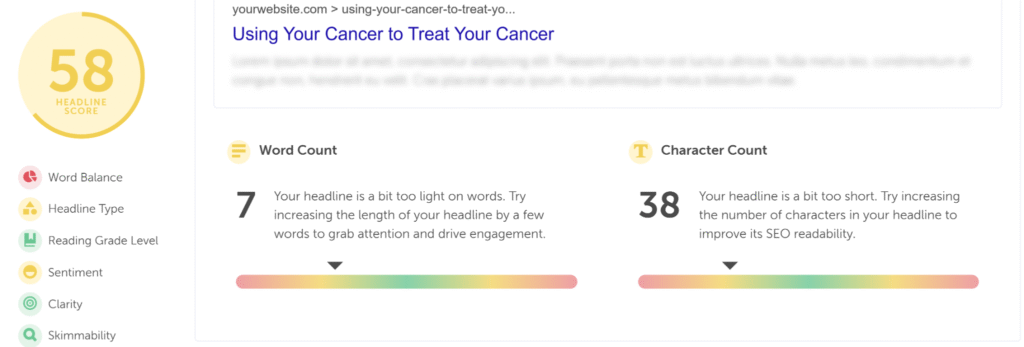
Your title is your first impression. Compare “Workout Tips” to “5 Time-Saving HIIT Workouts for Busy Parents (15 Minutes or Less).” The second title specifies who it’s for, what they’ll get, and sets clear expectations. Great health and fitness titles clearly communicate what readers will gain without using clickbait tactics.
Hook readers in the first 100 words
Most readers decide within seconds whether to stay or leave. Your opening must immediately validate that they’re in the right place. Try starting with:
- A relatable problem: “Can’t find time for workouts between meetings and family commitments?”
- A surprising statistic: “Only 23% of adults meet the recommended guidelines for both aerobic and muscle-strengthening activities”
- A compelling question: “What if you could boost your metabolism while sleeping?”
This approach hooks readers by acknowledging their challenges and promising solutions.
Show personality in your fitness journey stories
Personal stories transform dry advice into compelling content. Share your own fitness victories and setbacks, client success stories (with permission), or lessons from your journey. These narratives create connection and trust. Be honest about challenges; readers value authenticity over perfection. Your unique voice is what makes your blog distinct from thousands of others covering similar topics.
Mix formats: routines, expert Q&As, hacks
Variety keeps readers engaged across multiple visits. Alternate between:
- In-depth guides and tutorials
- Quick tips and life hacks
- Expert interviews and profiles
- Case studies and success stories
- Workout routines and meal plans
This content mix serves different reader needs – from those wanting deep dives to others seeking quick solutions.
Embed value in every takeaway
Each post should leave readers with actionable insights. Include downloadable workout plans, printable recipes, form check checklists, or progress tracking templates. These practical takeaways transform passive reading into active participation. When readers apply your advice and see results, they’re more likely to return and share your content.
Keep it evidence-based
In health and fitness, misinformation can be harmful. Back your claims with current research and proper context. This doesn’t mean loading your blog with academic jargon – translate complex concepts into accessible language. When discussing nutrition, exercise science, or wellness practices, cite reputable sources and explain how the evidence applies to real-life situations.
Apply proven blog writing tips for maximum reach
Use SEO naturally without keyword stuffing
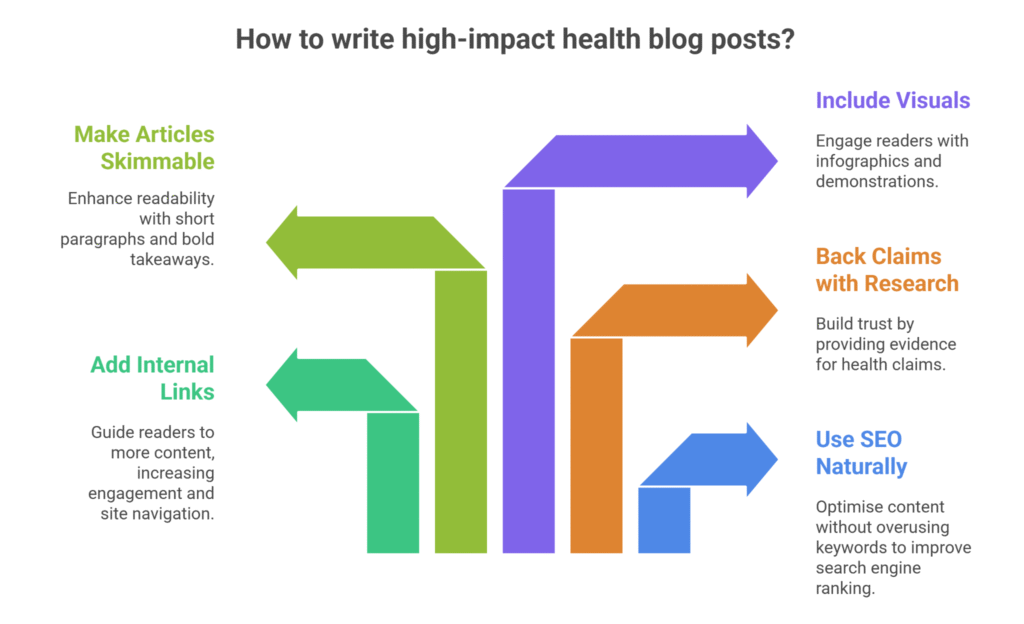
Balance search optimization with readability. Include target keywords (like “health blog writing” or “fitness routines”) in titles, headings, and naturally throughout the text – but never at the expense of quality. Research related questions your audience asks and address them thoroughly within your posts. This comprehensive approach satisfies both readers and search algorithms.
Add internal links to your own expert posts
Create a web of connected content by linking related articles. These internal links help readers discover more of your valuable content and signal to search engines that your site has depth. For example, when mentioning protein intake in a workout recovery article, link to your detailed nutrition guide. This strategy increases page views and strengthens your site’s topical authority in the health space.
Include credible research in health blog writing
Reference peer-reviewed studies, statements from recognized health organizations, and expert opinions. When citing research, briefly explain the findings in plain language and discuss their practical implications for your readers. This research-backed approach differentiates your blog from those sharing unverified information and builds trust with your audience.
Make articles skimmable with short paragraphs
Structure your fitness blog posts with scannable elements:
- Short paragraphs (3-4 sentences max)
- Descriptive subheadings that preview the content
- Bulleted and numbered lists for easy digestion
- Bold text for key points and takeaways
- Relevant images, infographics, or workout videos
This approach respects your readers’ time while ensuring they can quickly find the specific information they need.
Conclusion
Creating a successful health and fitness blog requires more than just knowledge of workouts and nutrition. It demands strategic planning, authentic storytelling, and consistent value delivery. By defining your niche, understanding your readers, crafting engaging content, and optimizing for discovery, you’ll build a fitness blog that stands out. Remember that the best blogs grow gradually through consistency and quality. Start implementing these strategies today, and watch your health and fitness blog transform into a trusted resource that readers return to again and again.
FAQs
What are the top blog writing tips for health blogs?
The most effective health blog writing tips include: backing claims with credible research, focusing on a specific niche rather than general health topics, crafting scannable content with clear subheadings, incorporating personal experiences for authenticity, and addressing your audience’s specific challenges. Including actionable advice in every post ensures readers gain immediate value, which builds loyalty and encourages return visits. Visual elements like infographics and workout demonstrations also significantly boost engagement.
Is health and fitness blog writing profitable in 2025?
Yes, health and fitness blog writing remains profitable, but successful blogs typically generate income through multiple streams rather than just advertising. These include premium memberships, online courses, affiliate marketing for quality products, brand partnerships, digital products (like meal plans or workout guides), and coaching services. The key to profitability is building a highly engaged audience that trusts your expertise, then offering solutions that genuinely address their needs.
How to start a fitness blog that stands out?
To create a standout fitness blog, identify an underserved niche where you have genuine expertise. Develop a consistent content schedule focusing on quality over quantity. Showcase your unique perspective and personal journey to differentiate from generic fitness advice. Incorporate various media formats like videos and interactive elements. Provide evidence-based information with practical applications that readers can’t easily find elsewhere. Consistency in voice, value, and visual identity also helps your blog become immediately recognizable in a crowded market.

Ridam Khare is an SEO strategist with 7+ years of experience specializing in AI-driven content creation. He helps businesses scale high-quality blogs that rank, engage, and convert.