The fourth week of September brought another wave of SEO changes, experiments, and even legal battles that could influence how marketers approach search in the coming months.
From Google wrapping up its August 2025 spam update, to AI Mode embedding directly into Chrome (currently in the US), to fresh Discover features and lawsuits targeting AI Overviews, SEOs had a lot to track. These developments underline how quickly the search ecosystem is evolving across both technical and strategic fronts.
Here are the five biggest stories of the week and what they mean for your SEO strategy:
1. Google’s August 2025 Spam Update Completes Rollout
What happened:
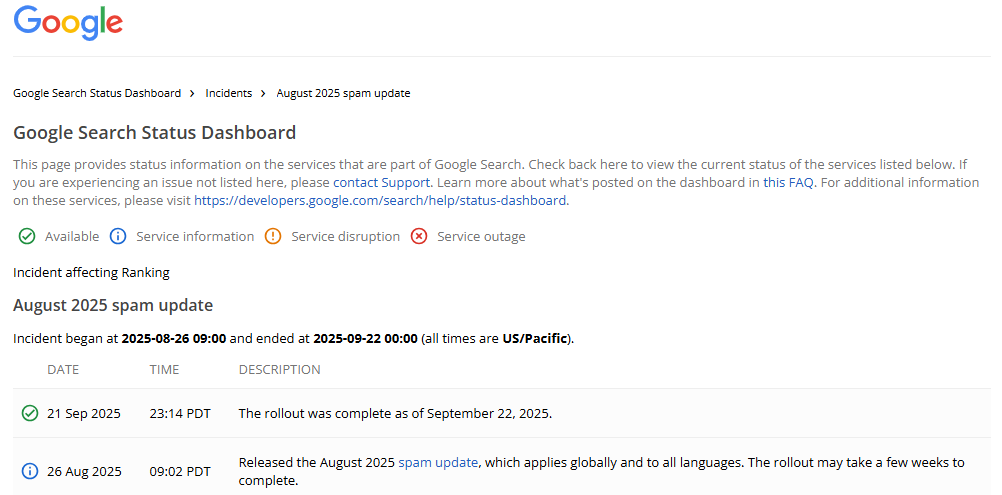
Google confirmed that the August 2025 spam update finished rolling out on September 22 after a 27-day cycle. Like previous broad spam updates, this one targeted thin, low-quality, and AI-generated content at scale.
Why it matters:
The impact varied across websites; Some saw improvements in rankings, while others experienced declines. These outcomes depend on how sites align with Google’s spam policies and content quality expectations.
What to do:
- Review Google’s Spam Policies to ensure your site meets recommended guidelines.
- Strengthen fact-checking, author signals, and references.
2. Google AI Mode Embeds Into Chrome (U.S. Rollout)
What happened:
Google announced that AI Mode is being integrated into the Chrome address bar, allowing users to enter queries and jump straight into AI-powered results. Currently, this rollout appears to be U.S. only.
Why it matters:
- Makes AI Mode more accessible, closer to default search behaviour.
- Could shift search behaviour toward conversational results instead of clicks.
What to do:
- Prepare for traffic distribution changes if adoption grows.
- Optimise for AI Overviews visibility with structured data, concise answers, and FAQs.
- Track U.S. traffic specifically to see if early effects show up.
3. Google Confirms It No Longer Supports &num=100 Parameter
What happened:
Google confirmed that the results-per-page parameter (&num=) is no longer supported in Search. This means users and SEOs can no longer force Google to display 100 results per page (or other variations). [Search Engine Land]
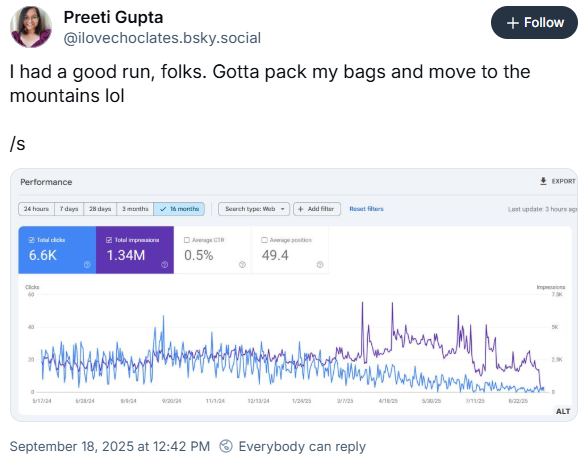
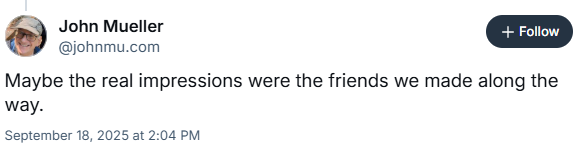
Around the same time, some site owners noticed a dip in impressions in Google Search Console, sparking discussion across the SEO community, and John Mueller also joined the discussion.
Here is that post:
Here is John’s reply:
Why it matters:
The &num= parameter was commonly used for rank checks and scraping workflows, so its removal changes how some SEOs gather data. At the same time, impression reporting in Search Console remains a hot topic, especially when sudden fluctuations appear.
What to do:
If your workflows relied on &num=100, consider alternative rank-checking methods.
Keep an eye on Search Console trends, but also remember that data shifts don’t always require immediate conclusions; sometimes, context (and a bit of humor) helps put changes into perspective.
4. Google Discover Adds Follow Feature & More Creator Content
What happened:
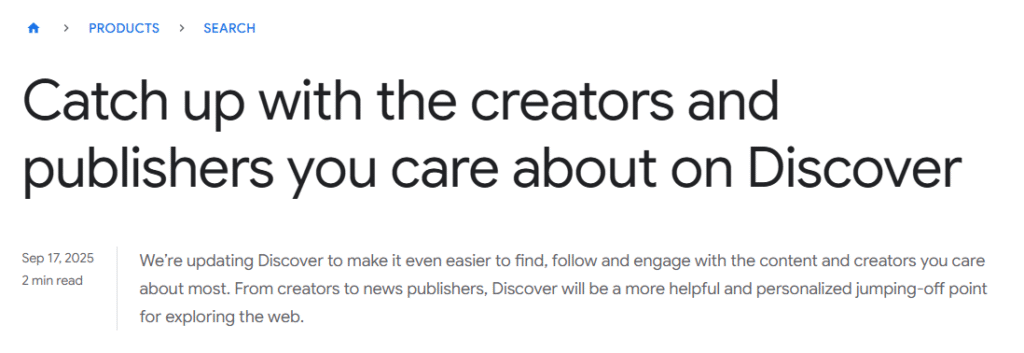
Google officially rolled out the Follow feature in Discover, along with more integration of creator content from X, Instagram, and YouTube Shorts.
Why it matters:
Discover is becoming more social-content oriented, potentially sending more traffic to personal brands and creators. For publishers, the competition within Discover may intensify.
What to do:
- Encourage followers and brand visibility across social platforms.
- Optimise metadata, thumbnails, and headlines for Discover.
- Track Discover traffic separately in GSC.
5. Penske Media Sues Over AI Overviews
What happened:
Penske Media (publisher of Rolling Stone, Billboard, Variety) filed a lawsuit against Google, alleging that AI Overviews uses their copyrighted material without permission. [TechCrunch]
Why it matters:
- This is one of the first major media lawsuits directly challenging Google’s AI Overviews.
- If successful, it could force Google to adjust how AI Overviews source and display content.
What to do:
- Watch the case closely; the outcome could set a precedent for SEO visibility in AI results.
- Consider how much of your content is surfaced in AI Overviews and whether attribution drives meaningful clicks.
Other Great Search Threads:
- AI & Authenticated Bots – John Mueller on Bluesky
→ Raised the question: if an AI system in your browser clicks around for you, should it be treated as a bot or just “you”? (Link) - ChatGPT Citation Drop – Niklas Buschner on LinkedIn
→ Reported that ChatGPT dropped 90% of citations overnight on September 11, hitting sources like Wikipedia and Reddit. (Link) - Google Ads Updates – Josh Silverbauer on LinkedIn
→ Highlighted that the Google Ads Conversions GTM template now supports new event parameters for richer data. (Link) - OpenAI Hiring SEO – Glenn Gabe on X
→ Pointed out the irony of OpenAI hiring a serious SEO lead while preparing a major domain migration. (Link) - SerpApi Workaround – SerpApi on LinkedIn
→ Announced its new Google Fast Light API, enabling scraping of 100 search results again after the &num=100 removal. (Link)

Ridam Khare is an SEO strategist with 7+ years of experience specializing in AI-driven content creation. He helps businesses scale high-quality blogs that rank, engage, and convert.