The standard playbook for digital marketing visibility hasn’t fundamentally changed since 2010. Keywords, backlinks, meta tags – these tactics still dominate most SEO strategies. Meanwhile, search behavior has completely transformed. People ask ChatGPT for recommendations, consult Perplexity for research, and treat TikTok like a search engine. The old playbook isn’t just outdated; it’s actively limiting your reach.
What is Visibility Engine Optimization (VEO)?
What is Visibility Engine Optimization (VEO)?
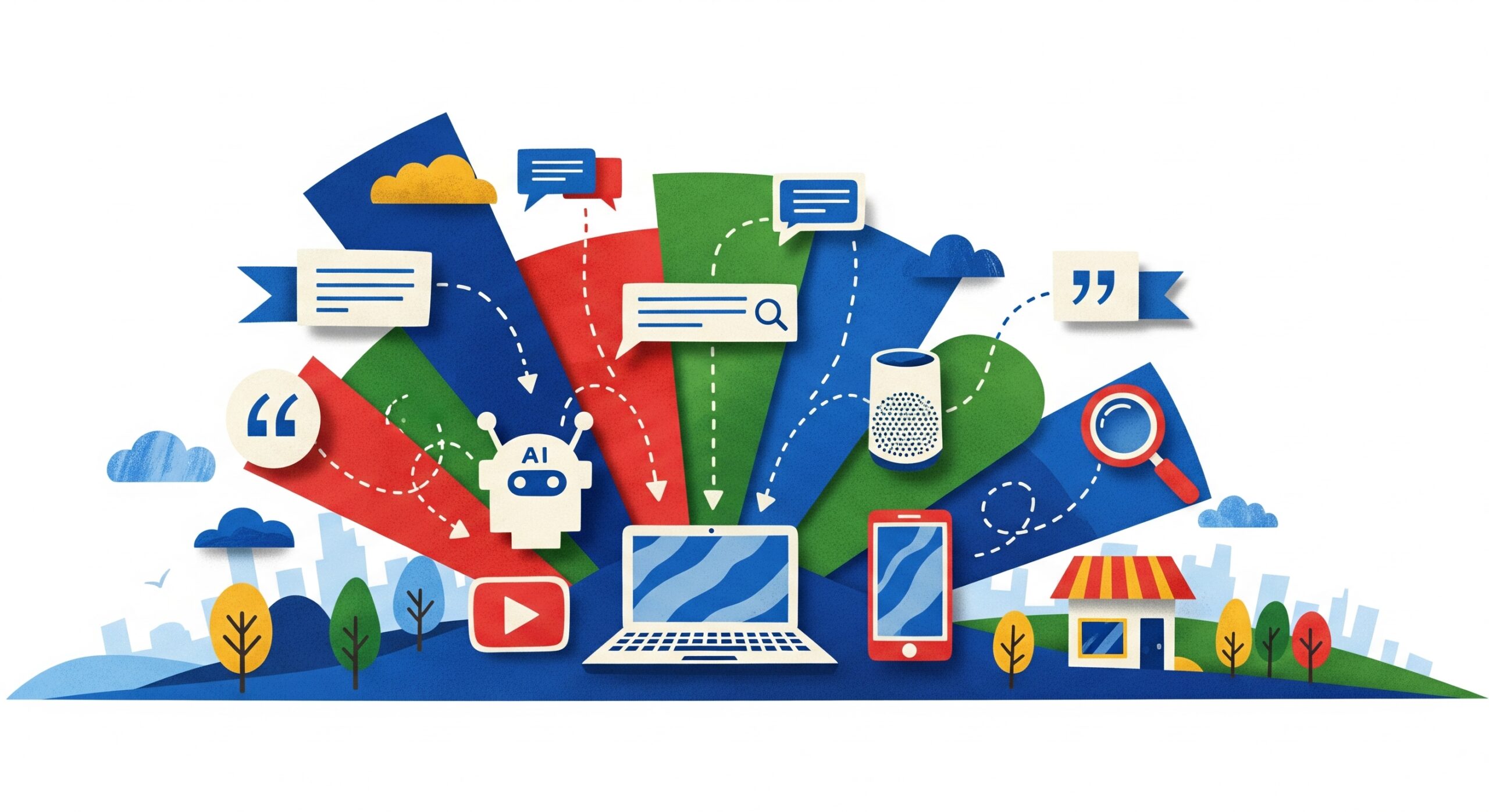
Visibility Engine Optimization represents a fundamental shift in how content gets discovered online. Where SEO focused on ranking in Google’s blue links, VEO ensures your content surfaces wherever people search – AI chatbots, voice assistants, video platforms, and yes, traditional search engines too. Think of it like this: SEO was about winning one race on one track. VEO is about competing in a decathlon.
The core difference lies in what these platforms actually want. Google wants relevant pages. ChatGPT wants citable facts. Alexa wants concise answers. TikTok wants engaging clips. VEO acknowledges these different needs and optimizes content to satisfy all of them simultaneously. It’s not replacing SEO – it’s expanding it to match how people actually find information in 2025.
Here’s what makes VEO distinct:
- Multi-platform optimization: Content structured for search engines AND AI models AND voice queries
- Entity-first approach: Building topical authority around concepts, not just keywords
- Citation-worthy content: Information formatted for AI systems to reference and quote
- Conversational readiness: Natural language patterns that work in chat interfaces
- Cross-format presence: Same core message adapted for text, video, audio, and visual search
Most brands discovered this shift the hard way when their organic traffic started plateauing despite perfect SEO scores. They ranked #1 for their target keywords but missed 60% of discovery opportunities happening in AI-powered channels.
Top Visibility Optimization Strategies for 2025
1. Citation Gap Analysis Strategy
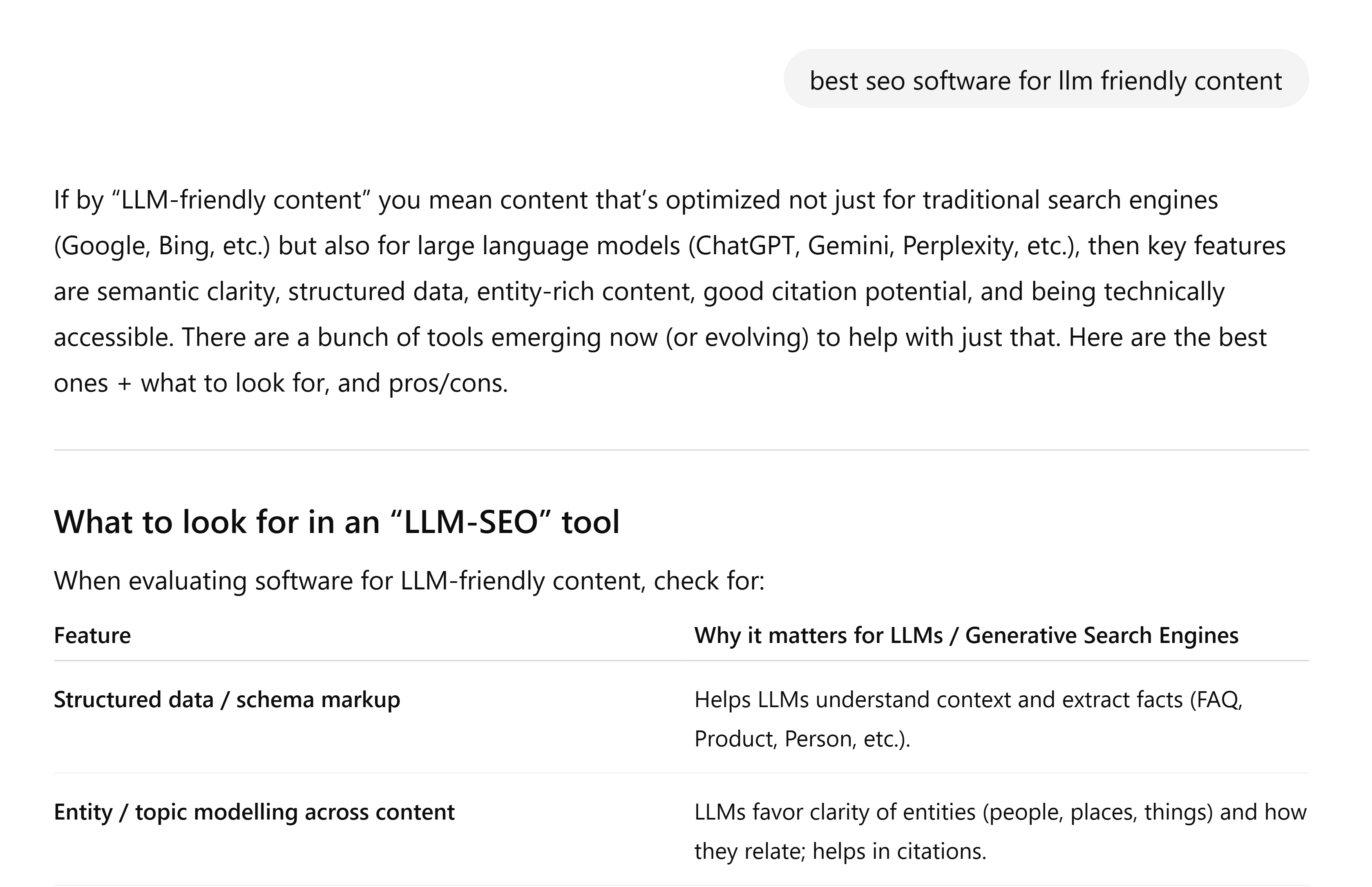
Citation gap analysis might be the most underutilized tactic in visibility optimization right now. Start by asking ChatGPT, Claude, and Perplexity about your industry topics. Note which competitors they cite. More importantly, note where they cite nobody. Those gaps? That’s your opportunity.
The process works like this: Document every time an AI platform says “according to industry experts” without naming anyone. Track phrases like “studies suggest” with no specific reference. These vague attributions signal content opportunities where you can become the cited source. One B2B software company found 47 uncited claims in their space and created authoritative content for each. Six months later, they appeared in 31% of AI responses about their category.
2. Content Modularity Implementation
Modular content isn’t about repurposing – it’s about architecting information for maximum extractability. Every piece you create should break down into quotable chunks that work independently. A 2000-word guide becomes twenty 100-word answers. Each answer stands alone but links back to the comprehensive resource.
“The best VEO content works like LEGO blocks – each piece has value alone, but they build something bigger when connected.”
Structure your content with:
- Clear section headers that work as standalone questions
- Opening sentences that summarize each section completely
- Bulleted takeaways that AI can easily parse and quote
- Defined terms in simple language for voice queries
- Statistical callouts with clear attribution
3. Authority Building Through Multi-Platform Presence
Authority in VEO means being the consistent answer across platforms. When someone asks about your topic on ChatGPT, searches on Google, and checks TikTok, they should encounter your brand’s perspective each time. This isn’t about spam. It’s about strategic omnipresence.
Focus your efforts here (in order of impact):
- YouTube: Long-form educational content that ranks in both YouTube and Google
- LinkedIn Articles: B2B topics that AI systems heavily reference
- Reddit contributions: Authentic discussions that LLMs train on.
Also Read: Why Reddit is Everywhere in SERPs Now? - GitHub documentation: Technical content that becomes the default reference
- Wikipedia citations: The ultimate authority signal for AI systems
Skip Instagram posts and Facebook updates unless your audience specifically searches there. Most AI systems barely touch these platforms for informational queries.
4. Schema and Structured Data Enhancement
Schema markup was optional for SEO. For VEO, it’s mandatory. AI systems rely on structured data to understand context, relationships, and credibility. The difference between being cited and being ignored often comes down to proper schema implementation. Yet most sites use less than 10% of available schema types.
| Schema Type | VEO Impact | Implementation Priority |
|---|---|---|
| FAQ Schema | Direct answers in AI responses | Critical |
| HowTo Schema | Step-by-step citations | High |
| Expert/Author | Credibility signals | High |
| Dataset Schema | Statistical references | Medium |
| Review Schema | Social proof in results | Medium |
5. AI Crawler Accessibility Optimization
AI crawlers behave differently than Googlebot. They need cleaner structures, faster load times, and zero ambiguity. That beautiful parallax scrolling effect? AI crawlers hate it. The clever JavaScript navigation? They’ll miss half your content.
Make these technical adjustments:
- Static HTML versions of dynamic content
- XML sitemaps specifically for AI crawlers
- Plaintext alternatives for complex visualizations
- API endpoints for direct data access
- Robots.txt permissions explicitly allowing AI bots
Many sites are blocking AI crawlers to “protect” their content, then wonder why competitors dominate AI-generated responses. You can’t be cited if you can’t be crawled.
VEO vs Traditional SEO: Key Technical Differences
Entity-Based vs Keyword-Based Optimization
Keywords mattered because that’s how people searched. “Best CRM software” was a keyword to target. In VEO, you optimize for the entity “CRM software” and all its relationships – features, vendors, use cases, integrations. You build a knowledge graph, not a keyword map.
This shift changes everything about content planning. Instead of targeting search volumes, you map entity relationships. Instead of keyword density, you measure entity coverage. Instead of long-tail keywords, you document entity attributes. The brands winning at visibility optimization think in concepts, not queries.
Conversational Query Processing Methods
People don’t talk to ChatGPT like they type into Google. They ask complete questions, provide context, and expect nuanced answers. “CRM for small law firm with Outlook integration under $50/month” isn’t five keywords – it’s one conversational query that VEO must address holistically.
Your content needs conversational markers:
- Natural question-and-answer patterns
- Context acknowledgment (“If you’re asking about X, you probably also wonder about Y”)
- Conditional responses (“It depends on…” followed by clear scenarios)
- Follow-up anticipation (“The next logical question is…”)
Answer Format Requirements and Content Structure
SEO optimized for featured snippets with 40-60 word answers. VEO requires multiple answer formats for the same information. The identical fact might need a one-sentence summary for voice search, a paragraph for chatbots, and a detailed explanation for traditional search. Sound exhausting? It is.
Here’s the framework that actually works:
The TLDR Method:
Tweet-length summary (280 characters)
List of key points (3-5 bullets)
Detailed explanation (200-300 words)
Reference section with sources
Structure every important concept this way. AI systems grab what they need.
Platform-Specific Visibility Metrics
Rankings don’t tell the VEO story. You need visibility metrics for each platform where your audience seeks information. Most analytics platforms haven’t caught up to this reality yet. The search is multi modal now.
| Platform | Key Metric | Measurement Tool |
|---|---|---|
| Rankings + Featured Snippets | Search Console | |
| ChatGPT | Citation frequency | Manual testing / API monitoring |
| YouTube | Suggested video appearances | YouTube Analytics |
| Voice Search | Answer selection rate | Device-specific testing |
| Perplexity | Source inclusions | Brand mention tracking |
Implementation Framework for Visibility Optimization
Technical Infrastructure Requirements
Your current tech stack probably isn’t ready for VEO. Most CMS platforms optimize for human readers and Google crawlers. Period. They don’t consider how an AI model will parse your content or how a voice assistant will extract answers. The infrastructure gap is real, and it’s costing you visibility.
Essential technical requirements:
- Headless CMS architecture for content API delivery
- Structured content models with defined relationships
- Multi-format output capability (JSON-LD, XML, plain text)
- Edge caching optimized for bot traffic
- Version control for content iterations
The companies crushing VEO invested in these changes 18 months ago. Everyone else is playing catch-up.
Content Optimization Workflows
Traditional content workflows – research, write, edit, publish – don’t work for Visibility Engine Optimization. You need parallel tracks for different platforms and formats. One source document spawns five optimized versions. It’s about multiplication, not just creation.
The workflow that actually delivers results runs like this: Research phase includes AI platform testing and competitor citation analysis. Writing phase creates modular, extractable sections. Optimization phase adapts content for each platform’s requirements. Publishing phase deploys across multiple channels simultaneously. Monitoring phase tracks visibility metrics in real-time.
But here’s the thing.
Most teams try to bolt this onto existing processes. That’s why they fail. VEO requires rebuilding your content operations from scratch.
Performance Monitoring Systems
You can’t improve what you can’t measure, and VEO measurement is complex. Traditional rank tracking tells you 20% of the story. You need visibility into AI citations, voice search selections, video suggestions, and cross-platform authority signals. Most importantly, you need to connect these metrics to business outcomes.
Build your monitoring stack with:
- AI mention tracking – Daily queries across ChatGPT, Claude, Perplexity
- Voice search testing – Automated Alexa/Siri/Google Assistant queries
- Video search presence – YouTube and TikTok search visibility
- Traditional SEO metrics – Because Google still matters
- Brand citation analysis – Who’s mentioning you and why
Integration with Existing SEO Strategies
Don’t abandon SEO for VEO. That’s like ditching your car because you bought a bike. They serve different purposes and work better together. The smartest approach layers VEO enhancements onto solid SEO foundations. Your existing keyword research informs entity mapping. Your link building supports authority signals. Your technical SEO enables AI crawler access.
The integration points that matter most:
- Convert keyword clusters into entity relationships
- Enhance meta descriptions with conversational hooks
- Add structured data to existing high-performing content
- Create API access for your best resources
- Build answer libraries from current FAQ pages
Tools and Techniques for Visibility Optimization
AI tools for VEO: Clearscope, Surfer, MarketMuse, etc.
The tool landscape for VEO is evolving rapidly. Some SEO tools added VEO features. Others built specifically for visibility optimization. Honestly, most people waste money on tools they don’t fully utilize. Pick one primary platform and master it before adding others.
| Tool | Best For | VEO-Specific Features | Monthly Cost |
|---|---|---|---|
| Clearscope | Content optimization | Entity analysis | $170+ |
| Surfer | SERP analysis | Multi-format guidelines | $89+ |
| MarketMuse | Topic modeling | Knowledge graph building | $149+ |
The real secret? These tools are only as good as your strategy. Throwing AI at bad content just gives you optimized bad content.
Try Rayo for a well researched, human sounding content.
Visibility analytics tools: Google Search Console, ChatGPT mentions, YouTube Insights, Ahrefs.
Measuring VEO performance requires piecing together data from multiple platforms. There’s no single dashboard that shows your complete visibility picture. Yet. This fragmentation frustrates everyone, but it also creates opportunity for those willing to do the work.
Your core analytics stack needs:
- Google Search Console – Still the foundation for search visibility
- ChatGPT mention tracking – Manual or API-based monitoring
- YouTube Analytics – For video search optimization
- Ahrefs or Semrush – Competitive visibility analysis
- Custom dashboards – Pulling everything together
Most brands check these tools individually. The winners build unified dashboards that show cross-platform visibility trends. That integration effort pays off when you spot opportunities others miss.
How to audit content visibility across engines (text, video, voice).
A proper VEO audit takes three times longer than an SEO audit. You’re checking visibility across search engines and AI platforms and voice assistants and video platforms. Each has different ranking factors. Each requires different optimization tactics. It’s overwhelming until you develop a system.
Start your audit with these steps:
- Query testing – Run 50 relevant queries across all platforms. Read Fan Out Queries.
- Citation analysis – Track where competitors appear but you don’t
- Format gaps – Identify content that exists in text but not video/audio
- Technical barriers – Find what’s blocking AI crawler access
- Authority signals – Map where you lack credibility markers
The audit reveals brutal truths. Most brands discover they’re invisible where their audience actually searches. That’s painful but fixable.
Conclusion: Mastering the Evolution from SEO to VEO
The shift from SEO to VEO isn’t coming – it’s here. Every day you delay implementation, competitors gain ground in AI citations, voice search results, and multimodal visibility. The playbook has changed, and clinging to pure SEO tactics is like optimizing for Yahoo while everyone moved to Google.
Start small but start now. Pick three high-value pieces of content. Optimize them for AI citation. Add structured data. Create video and audio versions. Test their visibility across ChatGPT, Perplexity, and voice search. Measure what happens. The results will convince you faster than any argument could.
VEO isn’t replacing SEO. It’s expanding what optimization means. The brands that understand this evolution – and act on it – will dominate the next decade of digital visibility. Everyone else will wonder why their perfect SEO scores translate to declining market presence.
The tools exist. The strategies work. The only question is whether you’ll adapt fast enough to capitalize on this shift.
Ready to evolve your visibility strategy?
FAQs
What specific tools measure visibility engine optimization performance in 2025?
The most effective VEO measurement tools in 2025 include Semrush, Profound, and more for tracking AI citations across ChatGPT and Claude, custom API monitoring scripts for Perplexity mentions. Google Search Console remains essential but only tells part of the story. Smart teams combine these with platform-specific analytics (YouTube Insights for video, podcast analytics for audio) and custom dashboards that unify cross-platform visibility data. The key is connecting data from at least 5-7 different sources to get a complete picture.
How does VEO impact traditional website traffic metrics?
VEO often shows initial traffic decreases as users get answers directly from AI platforms without clicking through. But don’t panic. What you lose in quantity, you gain in quality. Visitors who do arrive come pre-qualified, having already consumed your content via AI citations. These users convert at 2-3x higher rates. Plus, VEO drives new traffic types: API calls from AI platforms, embedded content syndication, and branded searches sparked by AI mentions. The total value typically exceeds traditional traffic within 6-12 months.
Which content formats perform best for visibility optimization across AI platforms?
Structured FAQ content with clear question-answer pairs consistently outperforms other formats for AI visibility. Tables comparing options, numbered step-by-step guides, and definition lists also get heavy AI preference. Video content between 5-8 minutes with closed captions ranks well across YouTube and gets pulled into AI responses. The winner though? Modular content that breaks complex topics into digestible, quotable chunks of 100-150 words. These get cited most frequently across ChatGPT, Perplexity, and voice assistants.
What are the minimum technical requirements for implementing VEO strategies?
At minimum, you need: proper schema markup (especially FAQ and HowTo schemas), an XML sitemap that includes all content types, server response times under 2 seconds for bot traffic, and clean URL structures without excessive parameters. Your robots.txt must explicitly allow AI crawlers like GPTBot and CCBot. Mobile responsiveness isn’t optional – voice searches pull heavily from mobile-optimized content. While a headless CMS helps, you can start VEO with WordPress or similar platforms if you properly configure structured data and ensure fast, crawlable pages.
How long does it take to see results from visibility optimization efforts?
Initial VEO results appear faster than traditional SEO – often within 2-4 weeks for AI platforms that crawl frequently. ChatGPT and Perplexity can start citing new content within days if it’s properly structured. Voice search optimization typically takes 6-8 weeks to show results. The full compound effect of VEO, where you become a default source across platforms, builds over 4-6 months. YouTube and video visibility can take longest, around 3-4 months, due to platform-specific authority requirements. The key is consistency – sporadic VEO efforts reset your momentum.

Ridam Khare is an SEO strategist with 7+ years of experience specializing in AI-driven content creation. He helps businesses scale high-quality blogs that rank, engage, and convert.