Most interior designers think beautiful portfolios automatically attract clients. Here’s the uncomfortable truth: gorgeous work buried on page 10 of Google might as well not exist. While competitors with mediocre portfolios dominate search results and book clients consistently, talented designers remain invisible online because they’ve ignored the one thing that actually drives visibility.
Essential SEO Strategies That Drive Interior Design Rankings
You’ve probably heard that SEO for interior designers is all about stuffing keywords into your About page and calling it done. That outdated approach is exactly why so many design websites struggle to rank. The real game has shifted dramatically – search engines now care more about context, expertise and user behavior than keyword density.
1. Local SEO Optimization for Interior Designers
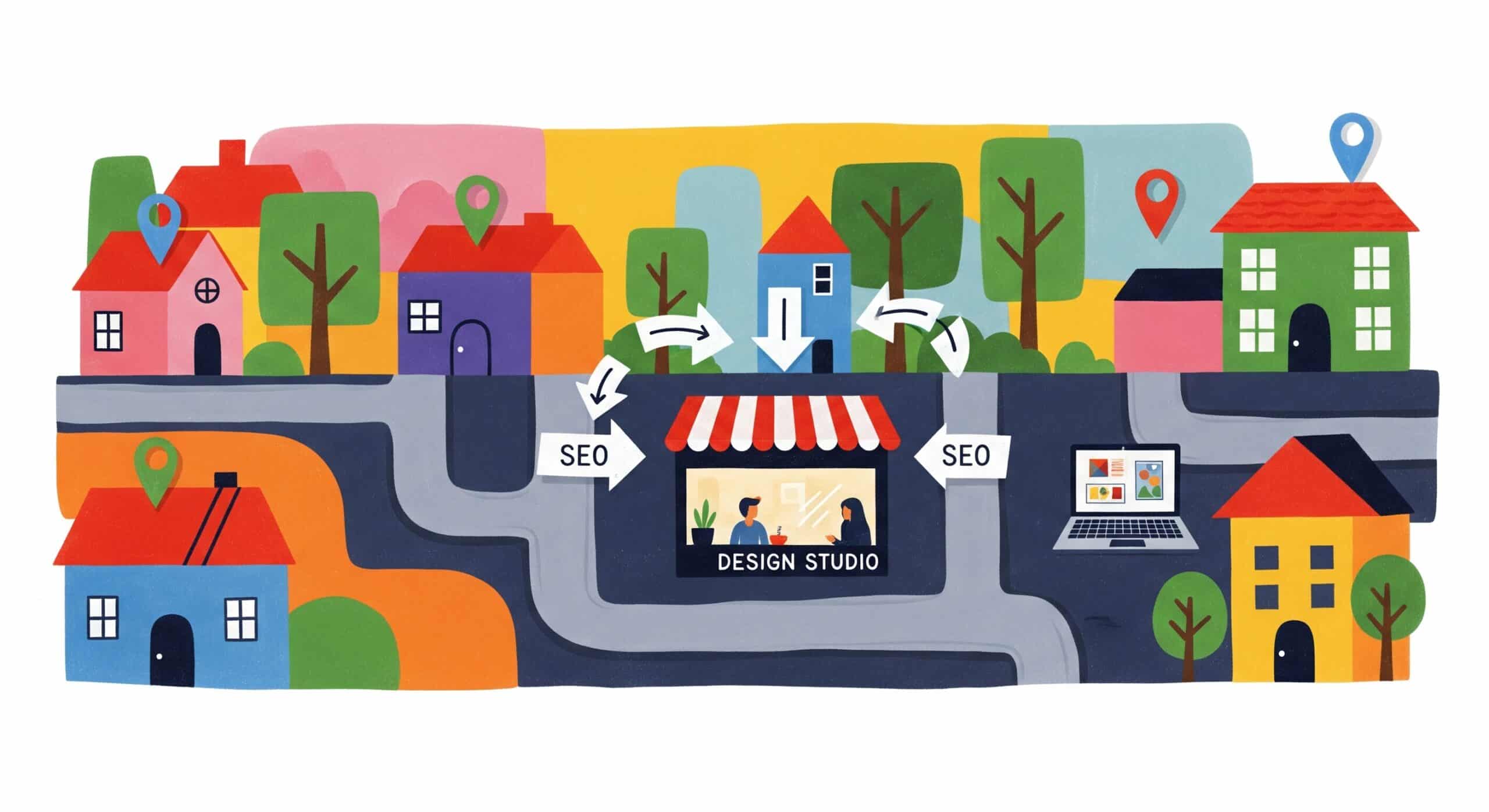
Here’s what drives me crazy: interior designers spending thousands on national SEO campaigns when 87% of their clients live within 25 miles of their studio. You’re not competing with every designer in America. You’re competing with the 15-20 designers in your metro area.
Start with location-specific landing pages for each area you serve. Not just “Interior Design in Los Angeles” – that’s too broad. Create pages for “Beverly Hills Kitchen Remodeling” and “Santa Monica Coastal Home Design” and “Pasadena Traditional Interior Styling.” Each page needs 800+ words of unique content about working in that specific neighborhood, local design trends, and actual project examples from that area.
Sound tedious? It is.
But here’s the payoff: one designer I worked with created 12 neighborhood pages in Dallas. Within four months, she was ranking #1 for “Highland Park interior designer” and booking $200K projects from organic search alone.
2. Keyword Research and Long-Tail Strategy
Forget competing for “interior designer” – that ship has sailed. The smart money is on long-tail keywords that actually indicate buying intent. Think about what your ideal client types at 11 PM when they’re frustrated with their space and ready to hire someone.
| Generic Keywords (Skip These) | Intent-Driven Keywords (Target These) |
|---|---|
| Interior design ideas | Interior designer for small NYC apartments |
| Living room decor | How much does kitchen design cost in Boston |
| Modern design | Interior designer who works with contractors |
| Home styling | Virtual interior design consultation pricing |
Use tools like Answer The Public to find questions your clients actually ask. Build content around those specific queries and watch your qualified traffic soar while competitors fight over vanity keywords.
3. Google Business Profile Optimization
Your Google Business Profile (what everyone still calls Google My Business) is basically free advertising that most designers completely botch. The bare minimum isn’t enough anymore – Google rewards profiles that show consistent activity and engagement.
Post new project photos every single week. Not monthly. Weekly. Add captions that naturally include your target keywords and neighborhood names. Respond to every review within 24 hours – even the good ones need more than “Thanks!” Ask satisfied clients specifically to mention the service they hired you for and their neighborhood in reviews.
The secret weapon? Google Posts. These mini-blog updates appear right in your Business Profile and disappear after seven days. Post about current projects and seasonal design tips and special offers. Most designers have never even heard of this feature. That’s your advantage.
4. Portfolio Image SEO and Alt Text
Those stunning before-and-after photos on your site? Google can’t see them without proper optimization. Every image needs four things: a descriptive filename (not IMG_4235.jpg), alt text that describes what’s in the image, a caption when relevant, and compression to keep file sizes under 200KB.
Here’s how most designers name their files: “living-room-1.jpg”
Here’s how you should name them: “modern-farmhouse-living-room-design-atlanta-2024.jpg”
Alt text isn’t just for accessibility (though that matters too). Write it like you’re describing the image to someone over the phone: “Minimalist white kitchen with marble waterfall island and brass pendant lights designed by [Your Business Name] in Chicago.”
5. Internal Linking Architecture
Stop treating your website like a brochure. Every page should lead somewhere intentional. Your portfolio pages should link to relevant service pages. Service pages should link to location pages. Blog posts should link to both.
But here’s the trick – use descriptive anchor text, not “click here” or “learn more.” If you’re linking to your kitchen design service page, the linked text should say something like “our kitchen renovation process” or “custom kitchen design services.” This tells Google exactly what that page is about.
Technical SEO and Content Marketing for Interior Design Websites
Creating SEO-Optimized Portfolio Pages
Portfolio pages are where most interior design SEO tips fall apart. Designers upload 30 gorgeous images with zero context and wonder why Google doesn’t care. Each project needs to be its own mini case study with at least 500 words of unique content.
Structure each portfolio page like this:
- Project overview – Client goals, style direction, square footage, neighborhood
- Design challenges – What problems did you solve? What was tricky about the space?
- Solutions and process – Your approach, material selections, vendor partners
- Results – Client feedback, before/after comparisons, specific improvements
Include schema markup for local businesses and use structured data to help Google understand these are actual completed projects, not just pretty pictures. Most designers miss this completely.
Writing Strategic Blog Content
Let’s be honest – nobody wants to write another “5 Ways to Style Your Coffee Table” post. Good. Don’t. Instead, create content that positions you as the local expert while naturally incorporating SEO strategies for interior decorators.
Write about real projects and real challenges. “Why This 1920s Craftsman Renovation Took 8 Months” tells a story while targeting “Craftsman home renovation [your city].” Share vendor recommendations and material sourcing tips and local showroom reviews. This content is actually useful AND ranks for local searches.
The frequency question always comes up. Quality beats quantity every time. One comprehensive 2,000-word post monthly beats four fluffy 400-word posts. Make each piece so valuable that other local businesses want to share it.
Mobile Performance and Site Speed
Picture this: a potential client finds you on Google while sitting in their badly designed living room. They click your site on their phone. If it takes more than 3 seconds to load, they’re gone. Google knows this and ranks faster sites higher.
Test your site speed right now at PageSpeed Insights. Anything under 50 on mobile is killing your rankings. The usual culprits? Massive image files and too many plugins and cheap hosting and fancy animations that nobody asked for.
Here’s the brutal prioritization:
- Compress every image (aim for under 200KB)
- Upgrade to decent hosting (not the $3/month plan)
- Remove unnecessary plugins and widgets
- Then worry about the fancy stuff
Building Quality Backlinks Through PR
Backlinks still matter, but buying them is suicide for your rankings. Instead, earn them through strategic PR. Get featured in local lifestyle magazines and home improvement blogs and real estate websites. One feature in your city’s magazine site is worth 50 random directory links.
Start local. Offer to write guest posts for:
- Real estate agent blogs (they need content, you need exposure)
- Local contractor websites (position yourself as their design partner)
- Neighborhood association newsletters
- Home builder showcases
Always suggest the exact anchor text when you provide quotes or guest content. Don’t leave it to chance. If they’re linking to you, make sure they use “Atlanta interior designer” not just your name.
Maximizing Your Interior Design SEO Impact
Everything we’ve covered means nothing if you don’t track results. Set up Google Analytics 4 and Search Console immediately. Monitor which pages drive inquiries, not just traffic. A thousand visitors looking for DIY tips won’t pay your bills. Ten visitors searching for “interior designer near me” might book consultations.
The reality? Best SEO practices for interior design websites change constantly, but the fundamentals remain: create valuable content for your ideal clients, optimize technically so Google can understand it, and build genuine authority in your local market. Most designers quit after two months when they don’t see instant results. The ones who stick with it for six months start dominating their local markets.
Pick three strategies from this guide. Just three. Master those before adding more. Because here’s what nobody tells you about how to improve interior design website ranking – consistency beats perfection every single time.
FAQs
How long does it take to see SEO results for interior design websites?
Expect 3-6 months for initial movement and 6-12 months for significant results. Local SEO often shows faster wins (2-3 months) especially if you’re consistent with Google Business Profile updates and have little local competition. National keywords take longer. The designers who see results in 90 days are usually fixing major technical issues that were holding them back.
Should interior designers focus on local or national SEO?
Unless you offer virtual design services exclusively, local SEO should be your primary focus. Even designers who work nationally get most clients from their region. Start hyperlocal (neighborhood level), expand to city-wide, then regional. National SEO only makes sense if you have a specific niche like “yacht interior design” or sell products online.
What are the best keywords for interior design websites?
The best keywords combine service + location + intent. Examples: “kitchen designer in [neighborhood],” “affordable interior design [city],” “commercial office design [metro area],” “bathroom remodel designer near me.” Avoid broad terms like “interior design ideas” – they attract browsers not buyers. Focus on transactional and commercial intent keywords.
How often should I update my interior design portfolio for SEO?
Add new projects monthly at minimum. Google favors fresh content and regular updates signal an active business. But don’t just dump images – each update needs proper optimization with unique descriptions, alt text, and context. Even adding detailed captions to existing projects counts as an update. Set a recurring calendar reminder.
Do interior designers need to blog for better SEO rankings?
You don’t need a blog, but you need fresh, valuable content somewhere on your site. If blogging feels forced, create detailed project stories, design guides for specific room types, or neighborhood style profiles instead. The format matters less than consistency and quality. Whatever you choose, commit to a regular publishing schedule you can actually

Ridam Khare is an SEO strategist with 7+ years of experience specializing in AI-driven content creation. He helps businesses scale high-quality blogs that rank, engage, and convert.