
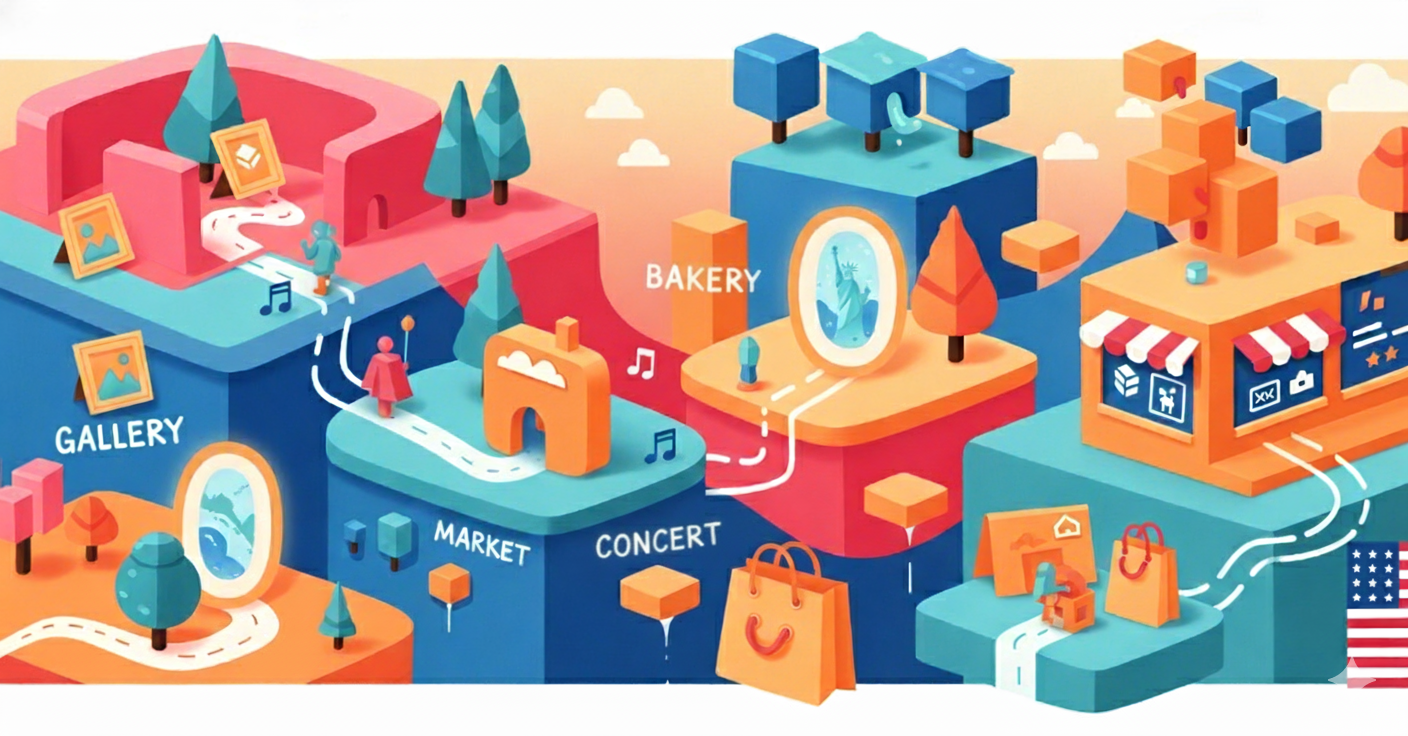
Traditional SEO tactics – keywords, backlinks, site speed – won’t mean much when your audience straps on a headset and steps into a virtual world. The metaverse doesn’t crawl websites the way Google does. It indexes 3D spaces and digital objects and immersive experiences that exist across multiple platforms simultaneously. That fundamental shift changes everything about how visibility works.
Think about the last time you searched for something in Horizon Worlds or Roblox. Did you type into a search bar? Probably not. You either spoke a command, followed a portal someone shared, or wandered until you found what looked interesting. That’s the reality of discovery in virtual spaces right now. And it’s precisely why most brands are getting their metaverse SEO strategy completely wrong.
Top Metaverse SEO Strategies for Virtual Platforms
1. Spatial Keywords and 3D Search Optimization
Spatial keywords work differently than their 2D counterparts. Instead of thinking about words on a page, you’re dealing with location-based discovery within infinite virtual real estate. When someone teleports into Decentraland looking for a virtual art gallery, they’re not searching “art gallery near me” – they’re looking for visual cues and proximity markers and waypoints that guide them through 3D space.
The trick is embedding searchable metadata directly into your virtual assets. Every building, every NFT display, even the ground textures need descriptive tags that spatial search algorithms can index. Most creators skip this entirely. They build beautiful spaces with zero discoverability.
Here’s what actually works:
- Tag virtual objects with context-aware descriptions (not just “chair” but “Victorian parlor seating”)
- Create landmark objects that serve as navigation anchors
- Build semantic relationships between spaces (your virtual store’s entrance should know it connects to the main plaza)
- Use proximity triggers to surface related content when avatars approach
2. Voice Search Integration for VR Environments
Voice commands dominate VR interactions for one simple reason. Nobody wants to type with virtual keyboards. Your metaverse content optimization tips need to account for natural speech patterns and conversational queries that would sound bizarre in traditional search.
But here’s where it gets tricky – voice search in VR isn’t just about finding things. It’s about commanding actions and navigating spaces and triggering experiences. “Show me the nearest concert” might teleport someone directly to your venue. Miss that intent, and you’re invisible.
| Traditional Voice Search | Metaverse Voice Commands |
|---|---|
| “Best Italian restaurant” | “Take me to an Italian place” |
| “Store hours for Nike” | “Is Nike’s virtual store open?” |
| “Reviews for Meta Quest 3” | “Show me Quest 3 demos” |
3. AI-Powered Content Generation and Personalization
Static content dies in the metaverse. Your virtual storefront can’t just sit there looking pretty – it needs to adapt and respond and evolve based on who’s visiting. AI-driven personalization isn’t optional anymore. It’s table stakes.
Imagine walking into a virtual Nike store. The AI recognizes you prefer running shoes, so the entire space reconfigures. Running tracks materialize. Marathon achievements float past. The latest Vaporfly model appears front and center. That’s not future tech – brands are doing this right now.
Sound overwhelming? Start small. Even basic AI implementations can transform engagement:
- Dynamic product displays based on avatar history
- Personalized NPC (non-player character) interactions
- Adaptive difficulty in gamified experiences
- Real-time language translation for global audiences
4. Virtual Storefront SEO for NFT Marketplaces
NFT marketplaces have their own discovery algorithms, and most creators have no clue how they work. OpenSea doesn’t care about your meta descriptions. Rarible isn’t reading your alt text. These platforms index completely different signals – trading volume and social proof and community engagement metrics that traditional SEO ignores.
The single most important factor? Collection coherence. Platforms favor NFT collections that tell a story and maintain consistent metadata across all assets. Random one-offs get buried.
“Your NFTs need to function like a content series, not standalone pieces. Think Netflix series, not random YouTube videos.”
5. Cross-Platform Backlink Building in Virtual Spaces
Backlinks in the metaverse aren’t URLs – they’re portals. When someone places a gateway to your virtual space in their world, that’s your backlink. The more trusted spaces that connect to yours, the higher your authority score across platforms.
But don’t just ask for portal exchanges like it’s 2010 link building all over again. Create reasons for other spaces to connect to yours organically. Host events. Build utilities. Offer exclusive content. Make your space a destination worth linking to.
Optimizing 3D Content and Digital Assets
Schema Markup for 3D Models and Virtual Objects
Schema for 3D objects is still the wild west, but early adopters are already seeing results. The key is using emerging standards like USD (Universal Scene Description) with embedded semantic data. Think of it as Schema.org for virtual worlds – structured data that helps platforms understand what your 3D content represents.
Most creators upload raw 3D files with generic names like “model_final_v2.glb” and wonder why nobody finds their content. That’s like publishing a webpage with no title tag.
Essential metadata for every 3D asset:
- Object classification (furniture/vehicle/architecture)
- Interactive capabilities (static/animated/physics-enabled)
- Performance requirements (polygon count/texture resolution)
- License terms (personal/commercial/NFT-enabled)
Texture and Material Optimization Techniques
Heavy textures kill performance, and dead virtual spaces rank nowhere. Platform algorithms actively penalize experiences that cause frame drops or long load times. You’ve got about 3 seconds before an avatar teleports away from your laggy space.
The secret sauce? Procedural textures and LOD (Level of Detail) systems that adjust quality based on viewing distance. A marble floor doesn’t need 4K textures when viewed from 50 virtual meters away.
Performance Optimization for Meta Quest Devices
Quest devices dominate the VR market, and they’re basically mobile phones strapped to your face. Your beautiful RTX-powered virtual world means nothing if it won’t run on Quest 2’s mobile chipset. Harsh? Maybe. Reality? Absolutely.
Here’s what drives me crazy – creators build for high-end PCs first, then wonder why 90% of users can’t access their content. Build for Quest first. Scale up for PC later. Your metaverse SEO strategy depends on accessibility, not just aesthetics.
Metadata Tagging for NFTs and Virtual Real Estate
Virtual land parcels need the same SEO attention as NFT collections. Every property should have rich metadata describing location advantages and development potential and historical significance within the platform’s economy. Sandbox parcels near Snoop Dogg’s mansion didn’t accidentally become valuable – their owners understood proximity metadata.
Smart tagging strategies that actually work:
- Geographic coordinates within the virtual world
- Adjacent landmark descriptions
- Traffic analytics from platform APIs
- Development restrictions and possibilities
- Historical transaction data
Future-Proofing Your Metaverse SEO Strategy
The metaverse platforms winning today might not exist in three years. Remember Second Life? Exactly. Your metaverse marketing strategies need to be platform-agnostic and adaptable to whatever comes next.
Focus on ownable, portable assets. Build experiences that can migrate between platforms. Create content in open formats that won’t lock you into dying ecosystems. The brands succeeding in virtual spaces aren’t betting on single platforms – they’re building flexible presence across multiple worlds simultaneously.
What’s your next move? Start with one platform, master its discovery mechanics, then expand systematically. The metaverse isn’t replacing traditional web presence. Its adding a new layer that requires its own optimization playbook. The sooner you start writing yours, the further ahead you’ll be when everyone else finally catches up.
FAQs
How does metaverse SEO differ from traditional website optimization?
Traditional SEO optimizes text and images for search engine crawlers. Metaverse SEO optimizes 3D spaces and interactive experiences for spatial discovery algorithms. Instead of keywords in content, you’re embedding metadata in virtual objects. Instead of page speed, you’re optimizing frame rates. The goal shifts from ranking in search results to being discoverable within immersive environments.
Which virtual platforms should businesses prioritize for metaverse presence?
Start with platforms where your audience already spends time. Roblox dominates with younger demographics. Horizon Worlds attracts Meta’s ecosystem users. Decentraland and Sandbox appeal to crypto-native communities. Don’t spread yourself thin – pick one platform and nail it before expanding. Platform-specific expertise beats shallow presence everywhere.
What tools are essential for tracking metaverse SEO performance?
Platform-native analytics provide basic metrics, but you need specialized tools for serious optimization. Metaverse Analytics tracks cross-platform presence. Spatial.io offers heat mapping for 3D spaces. Crucially, build custom tracking for avatar behaviors and interaction patterns – standard web analytics won’t capture what matters in virtual worlds. Traditional tools like Google Analytics become almost useless when your visitors are avatars, not browsers.

Ridam Khare is an SEO strategist with 7+ years of experience specializing in AI-driven content creation. He helps businesses scale high-quality blogs that rank, engage, and convert.