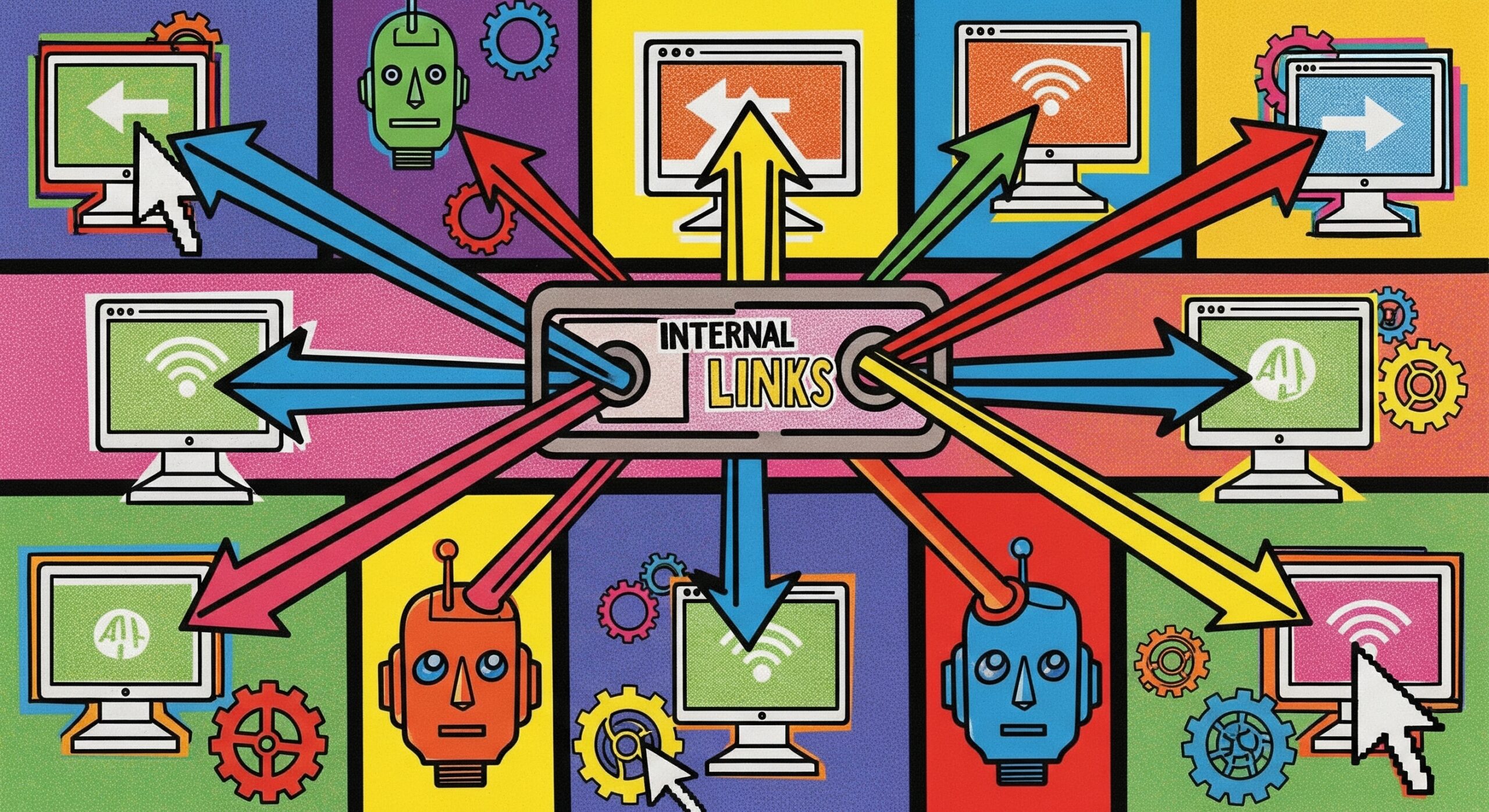
Most SEO experts will tell you that internal linking is critical but then expect you to manually add every single link. That approach worked fine when sites had 50 pages. Today, with thousands of pages fighting for attention, manual linking is basically a full-time job nobody has time for.
The shift to internal linking automation isn’t just about saving time (though you’ll save plenty). Its basically about consistency and scale. An automated system catches linking opportunities your team would miss, maintains perfect anchor text distribution and updates links when content changes. Think of it like having a tireless intern who actually understands context and never forgets to link that new pillar page to your 847 existing blog posts.
But here’s what drives everyone crazy: picking the wrong automation tool and watching it spray irrelevant links everywhere like a broken sprinkler. Sound familiar? Let’s fix that.
Top Internal Linking Automation Solutions for 2025
Search Atlas and OTTO SEO
Search Atlas paired with OTTO SEO feels like cheating. The combo analyzes your entire site architecture and competitor link structures and then suggests links that actually move the needle on rankings. OTTO’s AI understands semantic relationships between content – so when you write about “content marketing ROI,” it knows to link to your piece on attribution models, not just anything with “marketing” in the title. The real magic happens at scale. One client saw their average session duration jump from 1:47 to 3:23 after implementing OTTO’s suggestions across 2,000+ pages.
LinkBoss for Semantic Understanding
LinkBoss takes a different approach. Instead of matching keywords, it maps conceptual relationships between your content. The tool builds what it calls “knowledge graphs” – basically a map of how your content topics relate to each other. When you publish new content, LinkBoss automatically identifies where it fits in your existing content ecosystem and suggests bidirectional links that strengthen topical authority. At $149/month, it’s positioned for serious content teams who publish at least weekly.
LinkWhisper for WordPress Sites
WordPress users, this one’s yours. LinkWhisper integrates directly into your WordPress dashboard and suggests links as you write. The beauty? It learns your linking patterns over time. After about 30 posts, it starts suggesting links that match your style. No more generic “click here” anchors everywhere. The tool also identifies orphan pages (those sad, unlinked pages Google never finds) and fixes them with one click. For $77/year, it’s probably the best bang for your buck if you’re on WordPress.
MarketMuse Topic Cluster Mapping
MarketMuse plays the long game with internal linking automation. Rather than just connecting existing content, it maps out entire topic clusters and tells you what content to create next to strengthen your topical authority. The platform shows you exactly which pages should be your pillar content and which should support them. Then it automatically suggests the link structure to tie everything together. Fair warning: at $7,200/year minimum, this is enterprise territory.
Internal Link Juicer for Budget Teams
Don’t have thousands to spend? Internal Link Juicer costs $69.99 once. That’s it. The WordPress plugin automatically creates links between your posts based on keywords you define. It’s not as smart as the AI-powered options – you’re basically telling it “whenever you see this phrase, link to this page.” But for small sites or those just starting with automation, it beats manual linking by miles.
SEOWriting All-in-One Solution
SEOWriting attacks the problem differently. Instead of retrofitting links to existing content, it bakes internal linking into the content creation process. When you generate or optimize content through their platform, it automatically includes contextual internal links based on your site structure. The tool even adjusts anchor text variety to avoid over-optimization. At $19-49/month, it’s accessible for solo bloggers and small teams who want how to automate internal linking without complex setup.
Enterprise Tools Like seoClarity
seoClarity brings military-grade firepower to internal linking. Their Content Fusion technology analyzes search intent, user behavior and competitive gaps to build linking strategies that directly impact revenue. You get heat maps showing which links users actually click, conversion path analysis and real-time link performance data. The platform even predicts which new internal links will have the biggest impact on rankings. Price? If you have to ask, you probably can’t afford it. (Think $30,000+ annually.)
Implementation Steps for Automated Internal Linking
Site Audit and Current Link Analysis
Before automating anything, you need to know what you’re working with. Run a comprehensive crawl of your site using Screaming Frog or Sitebulb. Look for three critical things:
Orphan pages with zero internal links pointing to them
Pages with excessive internal links (anything over 100 is suspicious)
Broken internal links that lead nowhere
Export this data into a spreadsheet. Mark pages as “high priority” if they drive conversions but have fewer than 3 internal links. These become your quick wins. One e-commerce client discovered 43% of their product pages were orphaned. Fixing just that issue increased organic traffic by 27% in six weeks.
Define Linking Strategy and Priorities
Not all links are created equal. Your money pages (product pages, service pages, high-converting blog posts) deserve more internal link juice than your privacy policy. Create a simple hierarchy:
Priority Level | Page Type | Target Internal Links |
|---|---|---|
Critical | Conversion pages | 20-50 contextual links |
High | Pillar content | 15-30 links |
Medium | Supporting blog posts | 5-15 links |
Low | Archives, categories | 3-5 links |
Your automation tool should respect these priorities. If it doesn’t let you set link distribution rules, find one that does.
Tool Selection and Configuration
Picking your internal linking automation tools depends on three factors: your CMS, your budget and your technical capability. WordPress users should start with LinkWhisper or Internal Link Juicer. Everyone else needs to evaluate based on integration capabilities. Most tools offer free trials – use them. Set up a test on 50-100 pages first. Watch for weird linking patterns or over-optimization. The software should feel like it understands your content, not just matching keywords blindly.
Template-Based Link Implementation
Smart automation uses templates for consistency. Create link templates for different content types:
“For product pages: Always link to the parent category, 2-3 related products and one relevant blog post explaining use cases.”
These templates become rules your automation follows. LinkBoss and seoClarity excel at template-based linking. You define the pattern once and the system applies it across hundreds of pages instantly. No more random link placement that confuses users and search engines.
Monitor Performance and Metrics
Automation without monitoring is just automated failure. Track these metrics weekly for the first month:
Click-through rate on internal links (should be above 2%)
Orphan page count (should hit zero)
Average internal links per page (aim for 3-8)
Time on site (should increase by 20-30%)
Pages per session (target 2.5 or higher)
If these metrics aren’t moving after 30 days, your automation needs adjustment. Maybe you’re linking too aggressively. Or not enough. The data tells the story.
Final Recommendations for Internal Linking Automation
After implementing internal linking automation solutions for dozens of sites, here’s what actually matters: start simple and scale up. Don’t try to automate everything on day one. Pick your top 100 pages and perfect the automation there first. Once that’s humming, expand to the next 500.
The biggest mistake? Treating automation as “set and forget.” Even the best tools need human oversight. Schedule monthly reviews where you audit the automated links. Are they still relevant? Do they enhance user experience? Would a human make the same linking decision?
Remember this: automation handles the heavy lifting, but strategy still comes from you. The tools just execute faster and more consistently than any human could. Use them to eliminate the mundane work so you can focus on creating content that actually deserves all those internal links.
FAQs
How does AI improve internal linking automation compared to keyword-based tools?
AI understands context and intent, not just keywords. While keyword tools link “dog training” to “dog trainer,” AI recognizes that “puppy behavioral issues” and “positive reinforcement techniques” belong in the same content cluster. AI-powered tools analyze user behavior patterns and semantic relationships and search intent to create links that users actually want to click. The result? Higher engagement and better topic modeling that Google rewards with improved rankings.
What is the cost range for internal linking automation solutions?
Budget tools start at $69 (one-time) for basic WordPress plugins. Mid-tier solutions like LinkWhisper and SEOWriting run $77-600 annually. Professional tools like LinkBoss cost $149-500 monthly. Enterprise platforms like MarketMuse and seoClarity start at $7,200 annually and can exceed $50,000 for large implementations. Pick based on your publishing volume – there’s no point paying for enterprise features if you publish twice a month.
How long does it take to implement automated internal linking?
Basic setup takes 2-4 hours for simple plugins. Full implementation for a 1,000-page site typically requires 2-3 weeks, including initial audit and configuration and testing and refinement. Enterprise deployments can stretch to 2-3 months. The real time investment comes after launch – plan 2-3 hours monthly for monitoring and optimization.
Can automation tools handle broken links and orphan pages?
Yes, most modern internal linking automation tools actively monitor for both issues. They’ll flag broken links immediately and either remove them or suggest replacements. For orphan pages, tools like LinkWhisper and Search Atlas automatically identify unlinked content and propose relevant connection points. Some even send alerts when new orphan pages appear, catching the problem before it impacts SEO.
What metrics should I track after implementing automation?
Focus on engagement metrics first: pages per session should increase 20-40%, average session duration should jump 15-30% and bounce rate should drop 5-10%. For SEO impact, monitor average position changes for your target keywords (expect movement in 6-8 weeks) and organic click-through rates. Also track crawl depth – automated linking should help Google discover all pages within 4 clicks from your homepage.

Ridam Khare is an SEO strategist with 7+ years of experience specializing in AI-driven content creation. He helps businesses scale high-quality blogs that rank, engage, and convert.