
This week was dominated by major algorithm activity, fresh insights into Google’s ranking systems, and a significant regulatory challenge in Europe. From core updates to data enhancements, the search landscape experienced noticeable movement across multiple fronts.
SEOs also saw new clarity around how often Google adjusts rankings behind the scenes, making this an important week for understanding both short-term volatility and long-term search behaviour. Here’s everything SEO teams should stay aware of.
1. Google December 2025 Core Update Is Rolling Out
What happened:
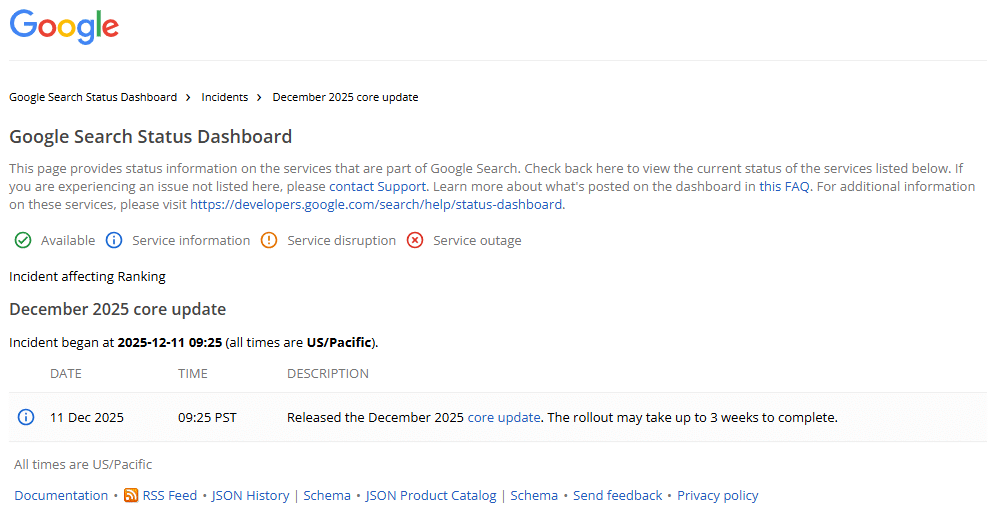
Google officially rolled out the December 2025 Core Update on December 11th. This broad update is expected to continue for several weeks and impacts how Google evaluates content relevance and quality across the entire search ecosystem.
Why it matters:
Core updates can cause noticeable ranking and traffic shifts, even for stable or historically strong pages. This update is shaping end-of-year visibility for many businesses.
What to do:
Monitor rankings closely, evaluate content quality, improve EEAT elements, and avoid making reactive changes during the rollout.
2. Major Ranking Volatility Spikes Over the Weekend
What happened:
Following the start of the core update, SEOs reported heavy ranking turbulence across most SERP tracking tools. Many noticed sharp rises and drops in keyword positions over the December 12–14 weekend.
Why it matters:
High volatility makes it difficult to interpret performance data or attribute changes to specific SEO actions. It also signals that the update is still in an early and unstable phase.
What to do:
Use annotations in reporting, compare longer time windows, and pause major SEO experiments until stability returns.
3. Google Launches More Granular Data in Search Console
What happened:
Google introduced more granular reporting capabilities inside Search Console, allowing deeper visibility into performance trends and finer-level data segmentation.
I see the new Google Search Console views are live for me – https://t.co/6byDZdcOWB pic.twitter.com/tzvITv8TDq
— Barry Schwartz (@rustybrick) December 9, 2025
Why it matters:
SEOs will now have better diagnostic power when analyzing fluctuations, identifying ranking patterns, and explaining movement to stakeholders.
What to do:
Incorporate these new data points into your performance dashboards, especially for update-related investigations and week-over-week comparisons.
4. Google Confirms Smaller Core Updates Happen Continuously
What happened:
Google stated that smaller algorithmic adjustments, essentially mini core updates, happen all the time behind the scenes, even when no major update is announced.
Google updated its core updates documentation to say smaller core updates happen on an ongoing basis, so sites can improve without waiting for named updates. https://t.co/MD7IrswbMk via @MattGSouthern, @sejournal
— Tom Pick | #B2Bmarketing guy (@TomPick) December 10, 2025
That explains why rankings often look like a yo-yo.🤔
Why it matters:
This confirms that ranking shifts throughout the year are not always tied to big updates. It explains why some sites experience subtle movement despite no official announcement.
What to do:
Monitor performance regularly, avoid assuming stability, and treat SEO as an ongoing optimisation effort rather than an “update-to-update” strategy.
5. Google Hit by EU Probe Over Unfair Use of Online Content in AI
What happened:
The European Commission launched a formal antitrust investigation into Google’s use of third-party content, particularly publisher articles and YouTube videos, in its AI systems. Regulators are evaluating whether Google used content without proper licensing or competitive fairness.
Why it matters:
This is a significant regulatory moment. Outcomes could impact how AI Overviews & AI Mode present information in search, and whether publishers receive compensation or new control mechanisms.
What to do:
Publishers should track this closely, review how their content appears in AI results, and prepare for potential changes in content-use rules or licensing models in 2026.

Ridam Khare is an SEO strategist with 7+ years of experience specializing in AI-driven content creation. He helps businesses scale high-quality blogs that rank, engage, and convert.