

Starting a blog can feel like setting sail on a vast ocean – exciting but intimidating at the same time. With countless platforms, design options, and content strategies to consider, many aspiring bloggers get overwhelmed before they publish their first post. The good news? You don’t need to figure everything out right away. By focusing on proven blogging tips for beginners, you can avoid common pitfalls and build a solid foundation.
Whether you’re blogging to share your passion, establish your expertise, or eventually monetize your knowledge, the fundamentals remain the same. This guide walks you through the essential steps to launch your blog successfully and create content that connects with readers from day one.
1. Pick a niche you’ll enjoy long-term
Choosing a niche you genuinely care about isn’t just good advice – it’s crucial for sustainability. When the initial excitement fades (and it will), your authentic interest will keep you creating content consistently. Ask yourself: What topics could I happily discuss for years? Where do my knowledge and passions overlap? A focused niche helps you attract dedicated readers and establish authority faster than a general “lifestyle” blog. Start specific rather than broad – you can always expand once you’ve built credibility in your core area.
There’s a lot of information out there for free, so you’ve got to figure out what makes your information different.
— Matt Wolfe
2. Choose the right blogging platform
Your platform forms the foundation of your entire site, so choose wisely. For beginners seeking the perfect balance of simplicity and growth potential, WordPress.org (self-hosted) remains the top choice. While Wix or Squarespace offer drag-and-drop simplicity, WordPress powers over 40% of all websites for good reason – it grows with you. Consider factors like customization options, plugin availability, and future monetization plans. Don’t get stuck in analysis paralysis, though; you can always migrate later if needed. The important thing is to start.
3. Secure a name that’s easy to remember
Your blog name serves as your first impression and brand ambassador. Aim for something memorable, pronounceable, and relevant to your niche. Keep it short – ideally under 15 characters – and avoid hyphens or numbers that complicate verbal sharing. Before falling in love with a name, check domain availability and social media handles. Having consistent branding across platforms instantly boosts your professionalism. Consider how your blog name might evolve as your content grows. Will it still make sense if you expand your topics? A flexible name gives you room to grow.
4. Start with Pillar Articles for Each Category on Your Blog
Begin your blogging journey by creating comprehensive pillar articles – in-depth, authoritative content that covers the fundamental topics in your niche. These cornerstone pieces serve as content anchors that you’ll link to from related posts. Plan 3-5 pillar articles (1,500+ words each) that address the main questions your target audience has. This strategy establishes your expertise immediately and provides a strong foundation for future content. Plus, search engines love these comprehensive resources, giving your new blog early visibility advantages that shorter posts can’t achieve.
5. Use high-performing content formats first
Not all content formats deliver equal engagement. As a new blogger, focus on proven high-performers like how-to guides, listicles, and problem-solution posts that naturally attract readers. These formats work because they directly address what people search for online. Step-by-step tutorials demonstrate your expertise while providing tangible value. Case studies and personal experience posts build credibility and connection. Start with these formats to generate early traction before experimenting with more creative approaches. Content that solves specific problems always outperforms vague, generalized posts.
6. Write a strong, clear post title

Your post title is the first (and sometimes only) chance to capture attention. Craft titles that clearly communicate the value readers will receive while incorporating your target keyword naturally. Use specific numbers when applicable (“7 Simple Ways to…” rather than “Ways to…”). Keep titles under 60 characters to prevent truncation in search results. Test different headline formulas: questions, how-tos, and list-based titles typically perform best for new blogs. Avoid clickbait that overpromises – this damages trust and increases bounce rates. Your title should set accurate expectations for what follows.
7. Insert headers to break text logically
Nobody enjoys facing a wall of text. Strategic headers (H2, H3, H4) create visual breaks that make your content scannable and digestible. Beyond aesthetics, well-structured headers help readers navigate to sections that interest them most. Follow a logical hierarchy where each section flows naturally to the next. Include keywords in some headers (particularly H2s) when it makes sense, but prioritize clarity over keyword placement. Headers also create opportunities for internal linking and help search engines understand your content structure, improving both user experience and SEO simultaneously.
8. Add a simple call-to-action
Every blog post should guide readers toward the next step. New bloggers often make the mistake of ending posts abruptly without direction. Instead, close with a clear, single call-to-action that makes sense for your goals. For a new blog, focus on relationship-building CTAs like encouraging comments, newsletter signups, or social follows rather than pushing products. Ask a thought-provoking question to spark discussion, or invite readers to share their experiences. The best CTAs feel like a natural extension of the value you’ve provided, not an awkward sales pitch.
9. Keep SEO basics strong from the start
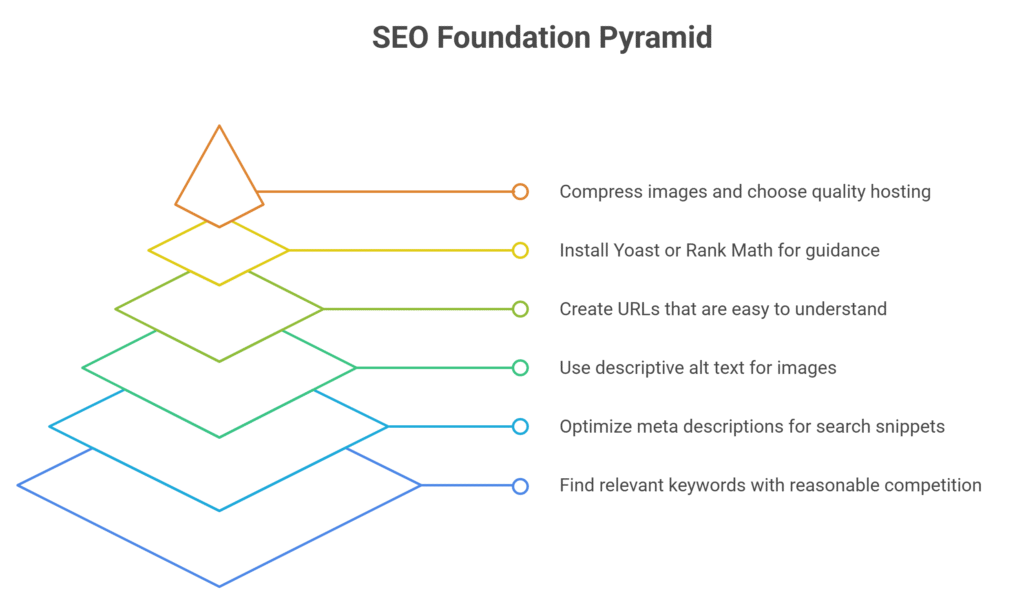
Building SEO foundations from day one saves painful adjustments later. Focus on fundamentals: research relevant keywords with reasonable competition, optimize meta descriptions, use descriptive image alt text, and create SEO-friendly URLs. Install an SEO plugin like Yoast or Rank Math to guide your optimization efforts. Prioritize site speed by compressing images and choosing a quality hosting provider. While you shouldn’t obsess over rankings initially, implementing these basics ensures your content has the technical foundation to perform well as your blog grows in authority.
10. Write for users, not algorithms
The most sophisticated SEO strategies fail without engaging, valuable content. Focus first on answering your readers’ questions thoroughly and solving their problems. When content genuinely helps humans, search engines eventually recognize and reward it. Avoid keyword stuffing, unnecessarily lengthy content, or technical tricks designed to game algorithms. These short-term tactics often backfire with penalties. Instead, create content so helpful that readers naturally want to share it. This human-first approach aligns perfectly with how modern search algorithms evaluate quality and relevance.
Start strong and keep refining your blog
Starting a blog is a journey that improves with each post you publish. By implementing these foundational blogging tips from the beginning, you’ll avoid common pitfalls that derail many beginners. Remember that even the most successful bloggers started exactly where you are now.
Focus on creating valuable content for your audience, maintain a sustainable publishing rhythm, and continuously learn from your analytics. Your blog will evolve as you discover what resonates with your readers. Don’t aim for perfection – aim for progress. With persistence, genuine expertise, and a willingness to adapt, your blog can grow from humble beginnings into a respected resource in your niche.
FAQs
What are basic SEO tips for bloggers in 2025?
Focus on comprehensive content that answers questions completely, optimize for voice search with conversational keywords, ensure mobile responsiveness, improve page speed, and build quality backlinks. User experience metrics like time-on-page and bounce rate significantly impact rankings in 2025, so create content that genuinely engages readers. Structured data and schema markup have also become essential for standing out in increasingly visual search results.
Which platforms are best for blogging for beginners?
WordPress.org remains the gold standard for balancing ease-of-use with growth potential. Other beginner-friendly options include Wix for simplicity, Ghost for writers wanting clean interfaces, and Squarespace for visually-appealing designs. Self-hosted WordPress offers the most flexibility for future growth but has a steeper learning curve than fully-hosted alternatives. Consider your technical comfort level and long-term goals when choosing.
How many blog posts should I publish each week?
Quality trumps quantity every time. For most beginners, 1-2 high-quality posts per week is sustainable and effective. Focus on comprehensive, valuable content rather than hitting arbitrary posting frequencies. Consistency matters more than volume – readers appreciate knowing when to expect new content, even if it’s just once every two weeks. Whatever schedule you choose, stick with it so readers know when to return.
What tools can help me avoid blogging mistakes?
Essential tools include: Grammarly or ProWritingAid for editing, Canva for graphics, Google Analytics for performance tracking, Yoast SEO for optimization, Hemingway Editor for readability, BuzzSumo for content research, and Trello or Asana for content planning. A good keyword research tool like Ubersuggest or Ahrefs helps identify topics your audience actually searches for, preventing wasted effort on content nobody wants.
Is keyword research still useful in blogging?
Absolutely! Keyword research remains fundamental but has evolved beyond simply finding high-volume terms. Focus on identifying search intent, discovering question-based queries, and targeting relevant long-tail keywords with manageable competition. Modern keyword research helps you understand what your audience needs, informing not just SEO but your entire content strategy. It’s about understanding the language your ideal readers use when looking for solutions.

Ridam Khare is an SEO strategist with 7+ years of experience specializing in AI-driven content creation. He helps businesses scale high-quality blogs that rank, engage, and convert.