
As AI-generated content becomes more common, finding reliable detection tools has turned into a must for many professionals. Whether you’re checking student essays, reviewing marketing copy, or screening job applications, the right AI detector can save you time and maintain quality standards. But not all tools are created equal – some excel at spotting specific AI writers like ChatGPT, while others offer better reporting features or integration options. Let’s cut through the confusion and compare the top AI detector tools available today, so you can pick one that actually works for your situation.
Compare top AI detector tools side by side
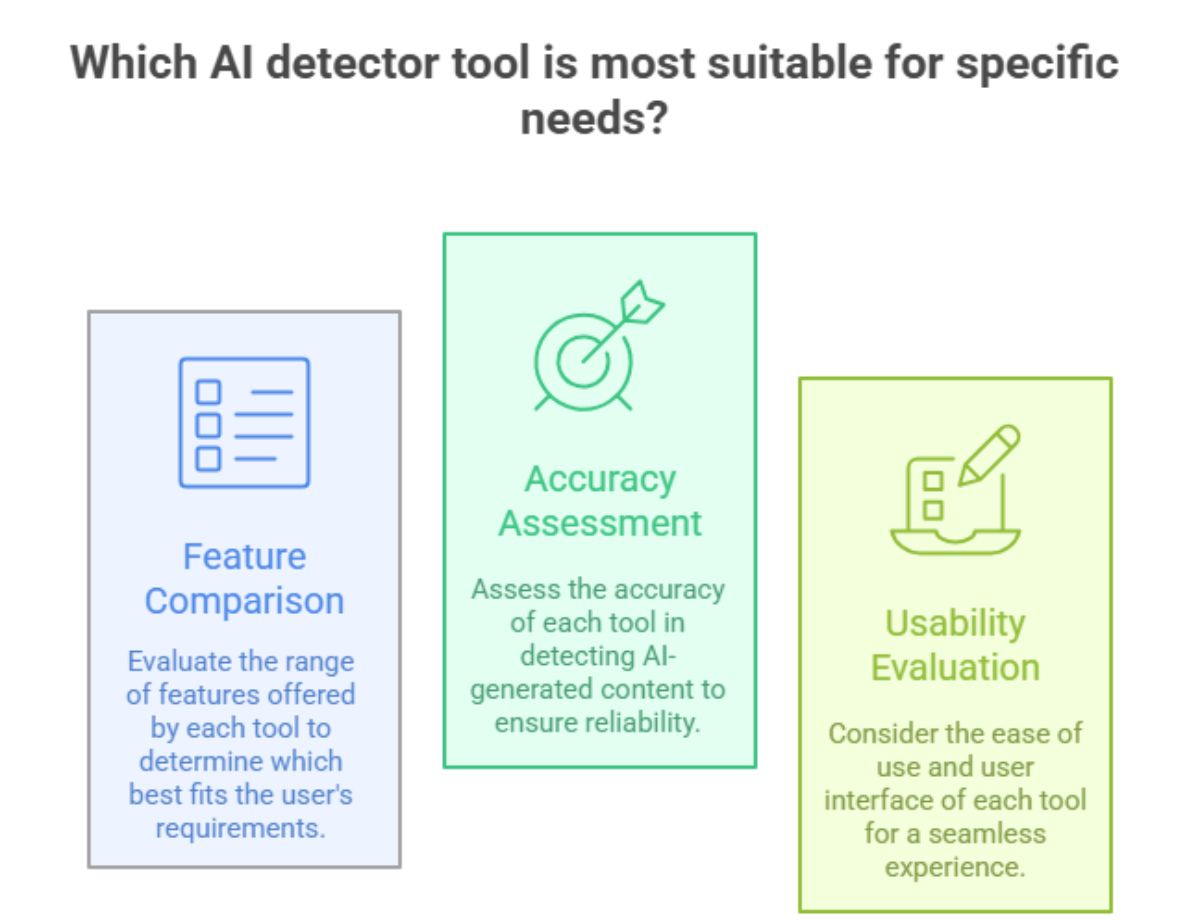
Content type it can detect
The best AI detectors vary widely in what they can identify. Most focus on text content, but the specific AI models they recognize differ significantly. GPTZero specializes in academic writing and can spot content from ChatGPT, GPT-4, and similar models. Originality.AI takes this further by detecting AI content across multiple languages and dialects. Content at Scale’s detector focuses on marketing copy, while Turnitin integrates AI detection alongside traditional plagiarism checking. For specialized needs, some tools can even identify AI-generated images, code snippets, or audio content.
Accuracy across content types
Let’s be real about accuracy – it’s all over the map. The top performers like Originality.AI claim detection rates above 90% for popular AI writers, but accuracy drops for more obscure models. Technical writing and creative fiction often cause false positives, with even the best AI content detector occasionally flagging human work incorrectly. The biggest challenge? Hybrid content that mixes human and AI writing. Most tools struggle when content has been AI-generated but heavily edited by humans. For critical applications, consider using multiple detectors to cross-reference results.
Speed of detection and reporting
Processing speed varies dramatically between tools. Winston AI delivers results in seconds for short content, while Copyleaks handles longer documents more efficiently. For bulk processing needs, look for tools that offer API access or batch uploading capabilities. The reporting speed matters too – some tools provide instant visual highlights of AI-probability by sentence, while others deliver more detailed but slower analyses. Your workflow requirements should guide this choice – real-time checking works best for editors, while batch processing suits institutional users reviewing multiple documents.
Formats supported and report outputs
Format compatibility can make or break your experience. While basic tools only accept plain text pasting, more versatile options support direct uploads of PDFs, Word documents, and Google Docs. Originality.AI offers a Chrome extension that works directly on websites, and GPTZero provides API access for custom integrations. Report quality differs too – basic tools provide simple percentage scores, while comprehensive options like Copyleaks deliver sentence-by-sentence analysis with probability ratings. For professional use, look for exportable reports with timestamps for documentation and sharing.
Free vs paid usage limits
Budget matters, so understand what you’re getting. Free versions typically limit you to 500-1,500 words per check with basic reporting features. GPTZero offers a no-cost tier that’s sufficient for occasional use, while Writer.com provides limited free checks monthly. Paid plans from Originality.AI start around $15-20 monthly with higher word counts and additional features. Enterprise solutions scale based on user numbers and organizational needs. For consistent detection requirements, paid solutions deliver better accuracy, more detailed reports, and higher monthly allowances.
Evaluate tools by key user needs
Best AI content detector for SEO use
SEO professionals need specialized features in their AI detectors. Content at Scale stands out for marketing teams by combining AI detection with readability analysis and SEO recommendations. Originality.AI offers a browser extension that integrates directly with content management systems and provides quick checks while writing. For agencies managing multiple clients, look for tools with team collaboration features and custom detection thresholds. The ideal detector for SEO should help identify which sections need human enhancement without disrupting your publishing workflow.
Top AI text detection tools for education
Educational settings demand different capabilities from AI detectors. Turnitin leads in this space by integrating AI detection with its established plagiarism checking system – crucial for comprehensive academic integrity. GPTZero was built specifically for educators and provides student-friendly explanations of its detection reasoning. For K-12 environments, simpler interfaces with clear visual indicators work best, while higher education typically requires more detailed analytics and integration with learning management systems like Canvas or Blackboard.
Tool options for compliance checking
Organizations with regulatory requirements need detection tools with robust documentation features. Winston AI provides detailed audit trails and watermarked reports suitable for compliance verification. For regulated industries, look for tools offering enterprise plans with enhanced security protocols compliant with standards like GDPR. Content verification platforms that generate certificates of authenticity provide additional protection for publishers concerned about AI disclosure requirements. The best compliance tools maintain immutable records that can withstand scrutiny if content authenticity is questioned.
Detectors fitting publishing workflows
Publishing teams need seamless integration with existing systems. Copyleaks offers direct WordPress plugins, while others provide API access for custom CMS integration. For collaborative teams, look for tools with permission settings and shared workspaces. The most workflow-friendly detectors offer batch processing for handling multiple pieces simultaneously and clear visual indicators that help editors quickly identify problematic sections. Pre-publishing verification should enhance rather than disrupt your existing process.
Check real-use success and reliability
Review scores across trusted sites
Check user reviews for real-world performance beyond marketing claims.
• Originality.AI: Praised for accuracy with GPT-4 content and high ratings on G2 and Capterra.
• Winston AI: Noted for strong customer support.
• GPTZero: Receives positive feedback from educators.
• Look for comments specific to your use case, educators and marketing teams often highlight different strengths.
• Cross-reference multiple platforms to spot consistent patterns before choosing an AI detector.
Number of users and tool popularity
User base size often indicates reliability. Established tools like Turnitin leverage their massive educational footprint of 15,000+ institutions worldwide. Newer options like Winston AI show rapid growth in user numbers, suggesting positive word-of-mouth momentum. Popular tools benefit from larger training datasets, potentially improving detection accuracy as more diverse content samples are analyzed. For business-critical applications, consider whether the provider has sufficient market presence to ensure ongoing development and support.
Support and feature update frequency
The AI detection landscape evolves rapidly, making regular updates essential. Check how often providers release new features and detection improvements. Originality.AI typically updates monthly to counter new AI writing techniques, while Copyleaks provides transparent update logs. Support availability varies dramatically – some offer only email tickets, while others provide live chat even on basic plans. For critical applications, prioritize tools with responsive support channels and clear communication about how they’re adapting to new AI models.
Accepted by universities and workplaces
Institutional adoption validates detector effectiveness. Turnitin’s AI detection capabilities have been formally adopted by thousands of universities globally. GPTZero reports acceptance at over 500 educational institutions. In professional settings, acceptance by publishing houses and marketing agencies signals credibility. When evaluating tools, ask vendors for case studies from organizations similar to yours. Some industries are developing standards for acceptable AI detection – staying aligned with these emerging standards ensures your chosen solution remains relevant.
Final call: Pick the top AI detector for you
Choosing the right AI detector comes down to your specific needs and budget. For educational purposes, tools like Turnitin and GPTZero offer specialized features for academic workflows. Marketing teams might prefer Originality.AI or Content at Scale for their SEO-friendly approaches. Start with free trials to test accuracy on your typical content before committing to a paid plan. Remember that the AI detection landscape is evolving rapidly – the best solution today may need supplementing tomorrow. Focus on providers demonstrating ongoing development and transparent accuracy reporting to ensure your chosen tool remains effective for your unique requirements.
FAQs
What is the most accurate top AI detector available?
Originality.AI consistently ranks among the most accurate, with detection rates above 90% for multiple AI models. GPTZero excels on academic content, while Winston AI specializes in spotting content from newer models like GPT-4. All detectors can give false positives, especially with technical writing, so human judgment remains essential.
Is there a best AI content detector tool for educators?
Educators value Turnitin for its seamless integration with plagiarism and learning management systems. GPTZero, built for education, offers detailed explanations as teaching tools. Winston AI provides educator discounts and detailed student feedback reports for smaller budgets.
How do the top AI text detection tools price their services?
Most AI detectors operate on subscription tiers based on usage volume. Entry-level plans start around $15-20 monthly for individual users, while enterprise solutions negotiate custom pricing based on institutional size. Many tools offer free tiers with limited functionality, typically allowing 1,000-2,500 words per check with basic reporting. Educational institutions often qualify for significant discounts, with some providers offering up to 50% off standard rates.
Can AI detectors help spot partially AI-edited content?
Partially AI-generated content presents the greatest challenge. Most top AI detectors can identify sections with high AI probability within mostly human content. Originality.AI and Winston AI provide sentence-level analysis that can flag specific AI-generated paragraphs. However, heavily edited AI text or content with minimal AI contributions (under 20% of total) often escapes detection. For critical applications, combining multiple detection tools provides the most comprehensive approach.
Which top AI detector offers the best score breakdown?
For detailed analytics, GPTZero leads with its unique perplexity and burstiness metrics that explain detection reasoning. Copyleaks provides comprehensive sentence-by-sentence highlighting with probability scores for each section. Originality.AI offers percentage breakdowns across multiple AI models, helping identify which specific AI system might have generated the content. The ideal breakdown depends on your technical familiarity and specific needs.

Ridam Khare is an SEO strategist with 7+ years of experience specializing in AI-driven content creation. He helps businesses scale high-quality blogs that rank, engage, and convert.