This week brought a blend of AI advancements, platform policy shifts, and new tools for advertisers. ChatGPT strengthened its role as a product-discovery engine, Google refined both Ads and SEO guidance, and YouTube’s new usage numbers remind us how fast content consumption habits continue to change.
Here are the five most important updates SEOs, advertisers, and content teams should know this week:
1. ChatGPT Introduces “Shopping Research Assistant” for Product Discovery
What happened:
ChatGPT launched a dedicated Shopping Research Assistant, enabling users to compare products, read summarised reviews, and explore recommendations directly inside ChatGPT. It aggregates specifications, pros/cons, price considerations, and even alternative picks.
Introducing shopping research, a new experience in ChatGPT that does the research to help you find the right products.
— OpenAI (@OpenAI) November 24, 2025
It’s everything you like about deep research but with an interactive interface to help you make smarter purchasing decisions. pic.twitter.com/jksGVpCXGm
Why it matters:
AI assistants are becoming product discovery engines, a direct challenge to Google’s shopping and product-review ecosystem. This could divert early-stage and comparison-intent traffic away from traditional search.
What to do:
- Ensure product pages are structured, descriptive, and easy for AI to extract.
- Strengthen review quality, pros/cons sections, and comparison tables.
- Start monitoring AI-search visibility, not just Google rankings.
2. John Mueller on “LLM-Only Markdown Pages”: No Clear Advantage — But No Hard Verdict Either
What happened:
A discussion surfaced around whether publishers should create simplified, Markdown-only pages designed specifically for LLMs and AI crawlers. Lily Ray asked Google’s John Mueller if these AI-friendly “shadow pages” offer any benefit.
Hi @johnmu.com Not sure if you can answer, but starting to hear a lot about creating separate markdown / JSON pages for LLMs and serving those URLs to bots. Can you share Google’s perspective on this?
— Lily Ray 😏 (@lilyray.nyc) November 24, 2025 at 12:52 AM
Why it matters:
There is no official guidance suggesting Markdown-only content improves AI visibility, and no evidence that LLMs prefer these stripped-down formats. But Mueller doesn’t dismiss the idea entirely either, especially for JS-heavy or render-dependent sites where bots may struggle.
What to do:
- Avoid producing oversimplified markdown-only content.
- Preserve UX, visual hierarchy, and contextual elements.
- Maintain SEO fundamentals: internal links, schema, structure, clarity.
3. YouTube Usage Hits 84% of U.S. Adults, According to Pew
What happened:
Pew Research reported that 84% of U.S. adults use YouTube, making it the most universally adopted online platform. Usage remains extremely strong across Gen Z, Millennials, Gen X, and older demographics. YouTube continues to be the only platform with consistent growth across every age group.
Why it matters:
YouTube isn’t just a social platform; it’s a core search engine, especially for product research, tutorials, entertainment, and news.
Brands that ignore YouTube are leaving massive discovery potential untapped.
What to do:
- Treat YouTube as a search channel, not optional social content.
- Optimise titles, descriptions, chapters, and keywords.
- Build mid-funnel content: demos, explainers, reviews, how-to formats.
4. Google Ads Disallows Offline Gambling Ads in More Countries
What happened:
Google expanded its gambling policy to prohibit offline gambling ads (real-world casinos, physical betting parlours, offline events) across dozens of countries.
This includes India, the UAE, Italy, Singapore, and many others.
Why it matters:
Massive impact for agencies and advertisers in the gambling verticals.
Campaigns may face disapproval, reduced reach, or full account restrictions.
What to do:
- Audit campaigns are running in affected regions immediately.
- Separate offline and online gambling assets to avoid accidental flags.
- Prepare alternative acquisition channels where restrictions apply.
5. Google Ads Overview Tab Gains Custom Views
What happened:
Google Ads has added Custom Views to the Overview tab, allowing advertisers to build personalised dashboards with pinned metrics, modules, and filters.
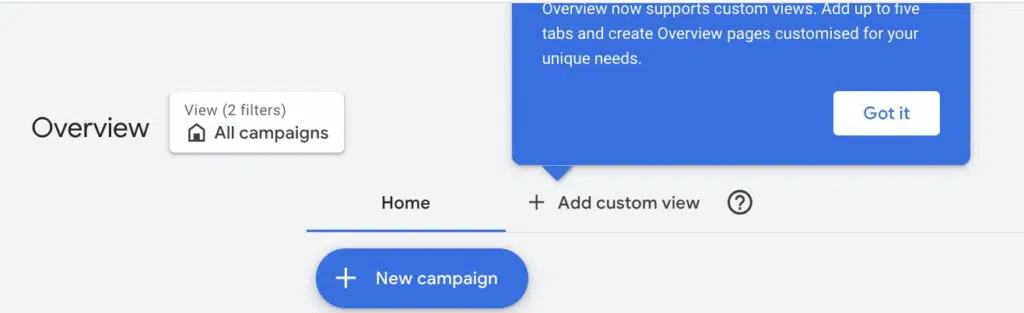
Govind Kumar Panwar also spotted this:
🚀 New Feature Update in #Google Ads!
— Govind Singh Panwar 🚀 (@mr_govindsingh) November 21, 2025
Now you can fully customize your Overview page:
✨ Use toggles to show or hide cards
✨ Drag & drop to reorder them
✨ Add up to 5 custom tabs based on what matters most to you
Create overview pages tailored to your unique needs#PPCchat pic.twitter.com/OlRqIdbJPY
Why it matters:
This significantly improves operational efficiency.
Marketers can now customise their main workspace, reducing the need for third-party dashboarding tools.
What to do:
- Build custom monitoring views tailored to campaign type, region, or KPI.
- Pin key modules (CPC spikes, asset performance, conversion value).
- Use Custom Views to review fast-moving campaigns more effectively.

Ridam Khare is an SEO strategist with 7+ years of experience specializing in AI-driven content creation. He helps businesses scale high-quality blogs that rank, engage, and convert.