

Most SEO guides tell you to check your rankings once a month and call it a day. That worked in 2015. Today, with Google’s algorithm updating almost daily and your competitors tweaking their strategies every week, monthly check-ins are like trying to navigate rush hour traffic by looking in the rearview mirror once every mile.
The difference between sites that consistently grow and those that plateau? The winners track performance like day traders watch stock tickers – constantly, systematically, and with an eye for patterns that others miss. You need to spot trends before they become problems and capitalize on opportunities while your competitors are still looking at last quarter’s reports.
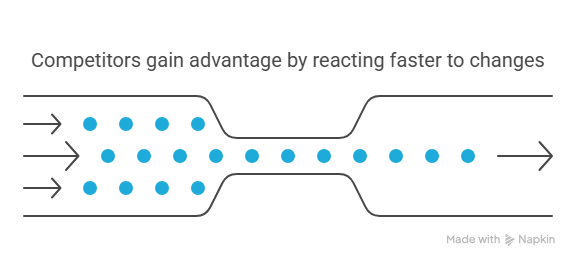
Essential Methods for Analyzing SEO Performance Trends
1. Track Organic Traffic Patterns
Your organic traffic tells a story, but most people only read the headline. They see traffic went up 10% and celebrate. Or down 10% and panic. The real insights hide in the patterns beneath those surface numbers.
Start by segmenting your traffic data into meaningful chunks. Look at traffic by landing page groups (not individual pages), by user intent, and by entry point in the conversion funnel. A 15% traffic drop might seem catastrophic until you realize it’s all from informational blog posts while your money pages actually increased by 8%. That’s not a crisis. That’s a shift.
Set up custom alerts for unusual patterns. When your Tuesday 2 PM traffic suddenly spikes 300% above normal, you need to know immediately – not three weeks later during your monthly review. These anomalies often signal algorithm tests, competitor moves, or technical issues that need immediate attention.
2. Monitor Keyword Ranking Fluctuations
Here’s what drives me crazy: people tracking 500 keywords and treating them all equally. Your position for “best project management software” dropping from 3 to 5 matters infinitely more than 50 long-tail keywords bouncing between positions 45 and 55.
Focus on what I call “revenue keywords” – the 20-30 terms that actually drive conversions. Track these daily. Yes, daily. Create three buckets for your rankings:
-
Strike Zone (Positions 1-3): These need defending at all costs
-
Opportunity Zone (Positions 4-10): Small improvements here yield massive traffic gains
-
Investment Zone (Positions 11-20): Worth pushing but requires real effort
Anything below position 20? Check quarterly at most.
3. Analyze Click-Through Rate Changes
Your CTR is the canary in the coal mine for analyzing SEO performance trends. When it starts dropping before your rankings do, you’re about to have a problem. The algorithm watches user behavior obsessively, and CTR is its favorite metric.
But raw CTR percentages lie. A 3% CTR for position 1 is terrible. For position 8, it’s exceptional. Always analyze CTR relative to position and compare it to the expected CTR curve for your industry. (If you don’t know your industry’s curve, you’re flying blind.)
Testing title tags seems simple enough, right? Wrong. Most people test randomly and draw conclusions from noise. You need at least 1,000 impressions per variation and a full 28-day cycle to account for weekly patterns. Track the delta between your CTR and the position average – that’s your real performance indicator.
4. Measure Page Speed Impact
Let’s be honest, the official Core Web Vitals documentation reads like it was written by robots for robots. After burning countless hours trying to optimize for every metric Google mentioned, here’s what actually moves the needle: First Input Delay (FID) barely matters for most sites. Largest Contentful Paint (LCP) is everything.
Get your LCP under 2.5 seconds and stop obsessing. The difference between 1.8 seconds and 1.2 seconds won’t impact your rankings nearly as much as fixing that one image that takes 6 seconds to load on mobile.
“Speed is not just about rankings anymore – it’s about capturing users before they bounce. Every 100ms of delay costs you 1% in conversions.”
Track speed by template type, not individual pages. Your product pages might average 2.1 seconds while your category pages crawl at 4.3 seconds. Fix the templates. Individual page optimization is like mopping the floor while the roof leaks.
5. Review Backlink Profile Evolution
Your backlink profile ages like wine – it either gets better or turns to vinegar. Most SEOs count total backlinks like they’re collecting baseball cards. Quantity without quality is just spam waiting to happen.
Track three metrics that actually matter when analyzing SEO trends:
|
Metric |
What to Track |
Warning Signs |
|---|---|---|
|
Link Velocity |
New referring domains per month |
Sudden spikes or drops over 50% |
|
Authority Distribution |
% of links from DR 50+ sites |
Dropping below 15% of total |
|
Anchor Text Diversity |
Brand vs. exact match ratio |
Exact match exceeding 10% |
Lost links matter more than new ones. When a DR 70+ site removes your link, that hurts more than gaining five DR 30 links helps. Set up alerts for any lost link from a site with DR above 50 – these need investigating within 48 hours.
Advanced SEO Trend Analysis Techniques
Segment Performance by Device Type
Mobile-first indexing has been around since 2018, yet people still analyze their SEO like it’s 2010 – all devices lumped together. Your mobile and desktop SEO are essentially two different websites competing in the same race.
Desktop users searching for “project management software comparison” want detailed feature tables and in-depth analysis. Mobile users typing the same query at 11 PM are probably just trying to remember the name of that tool their colleague mentioned. Same keyword. Completely different intent.
Create separate dashboards for mobile and desktop performance. Track not just traffic but behavior metrics – bounce rate, time on page, and scroll depth all tell different stories depending on the device. A 70% bounce rate on mobile for a 3,000-word guide isn’t necessarily bad if users are finding their answer in the featured snippet and leaving satisfied.
Compare Seasonal Performance Variations
Every business has seasons, even if you think yours doesn’t. B2B software sees traffic crater between Christmas and New Year’s, then spike in late January when everyone’s back with fresh budgets and New Year’s resolutions to “finally fix that process.”
Stop comparing this month to last month. Compare this October to last October and the October before that and the one before that. Build a seasonal coefficient for each month – if October is typically 1.3x your average month, a 20% increase isn’t growth, it’s underperformance.
What about unusual events? 2020 broke everyone’s seasonal models. When analyzing outliers, create a “normalized” version that strips out the anomaly, then track both. This year’s Black Friday falling a week later than usual? That’s a 7-14% swing in November/December traffic split that has nothing to do with your SEO.
Identify Content Decay Patterns
Content decay is like entropy – inevitable, predictable, and ignored until it’s too late. That ultimate guide you published two years ago? It’s probably bleeding traffic right now while you’re busy creating new content.
Here’s the pattern nobody talks about: content doesn’t decay linearly. It holds steady for 6-18 months, drops 20-30% quickly, plateaus briefly, then falls off a cliff. Catching it in that first drop phase means a quick refresh can restore 80% of lost traffic. Wait until the cliff? You’re basically starting over.
Track the “peak-to-current” ratio for all content over six months old. Anything that’s lost more than 25% from its peak needs immediate attention. But here’s the kicker – don’t just update the date and add a paragraph. Google sees right through that lazy refresh. You need substantial changes: new sections, updated data, fresh examples, or reformed structure.
Track Competitor Performance Shifts
Most competitive analysis is backwards-looking garbage. “Here’s what your competitor ranked for last month!” Great, now let me hop in my time machine and do something about it.
Real competitive intelligence means tracking velocity and acceleration. Your competitor jumped from position 15 to 8 for a key term? That’s velocity. They’re improving rankings for 50+ related terms simultaneously? That’s acceleration, and it means they’ve figured out something you haven’t.
Set up tracking for five key competitors – not fifty. Monitor these signals:
-
Content velocity: New pages published per week
-
Link acquisition rate: New referring domains per month
-
SERP feature wins: Featured snippets captured or lost
-
Technical changes: Site speed improvements or structure modifications
When a competitor suddenly changes their pattern – like going from 2 posts per week to 10, or their link velocity triples – something’s happening. Maybe they hired an agency, got funding, or are preparing for a major campaign. Don’t wait to find out.
Mastering SEO Performance Trend Analysis
The sites that win at SEO aren’t necessarily the ones with the best content or the most links. They’re the ones that spot trends early and act decisively. While your competitors are still looking at monthly reports, you’re adjusting daily based on real signals.
Remember this: how to analyze SEO performance trends isn’t about collecting more data. Everyone has access to the same tools and metrics. The difference is in knowing what to ignore, what to monitor obsessively, and when a 2% change is actually a five-alarm fire.
Start with the fundamentals – track your money keywords daily, monitor CTR relative to position, and watch for content decay. Once those are automated, layer in the advanced techniques. But whatever you do, stop treating SEO analysis like a monthly chore. Make it a daily habit. Five minutes each morning reviewing your dashboards will catch problems your competitors won’t spot for weeks.
The best time to implement proper SEO performance monitoring was six months ago. The second best time? Right now, before your traffic starts its next unexpected drop.
FAQs
How often should I analyze SEO performance trends?
Check your critical metrics (top 20 keywords, organic traffic, CTR) daily – it takes five minutes once you have dashboards set up. Do deeper analysis weekly, focusing on one area each time. Full comprehensive reviews should happen monthly, but by then you shouldn’t find any surprises.
What tools are best for monitoring SEO trends?
Google Search Console is your foundation – it’s free and has the most accurate data. Add Ahrefs or SEMrush for competitive tracking and rank monitoring. For technical SEO, Screaming Frog beats everything else. But honestly, the best tool is a simple spreadsheet where you track your custom KPIs. Expensive tools without clear tracking processes are just expensive distractions.
Which metrics indicate declining SEO performance?
Watch for CTR dropping while positions hold steady – users are choosing competitors over you. Increased bounce rates with stable traffic means you’re attracting the wrong audience. But the earliest warning sign? Your branded search volume declining. When people stop searching for you by name, your overall SEO is about to tank.
How do I distinguish between normal fluctuations and real trends?
Apply the “rule of three” – one day is noise, three days is a pattern, seven days is a trend. Also, check if changes affect all pages or just specific templates. Site-wide changes usually indicate algorithm updates or technical issues. Page-specific changes are typically about content quality or competition. A 10% daily swing is normal. A 10% weekly trend demands investigation.

Ridam Khare is an SEO strategist with 7+ years of experience specializing in AI-driven content creation. He helps businesses scale high-quality blogs that rank, engage, and convert.