
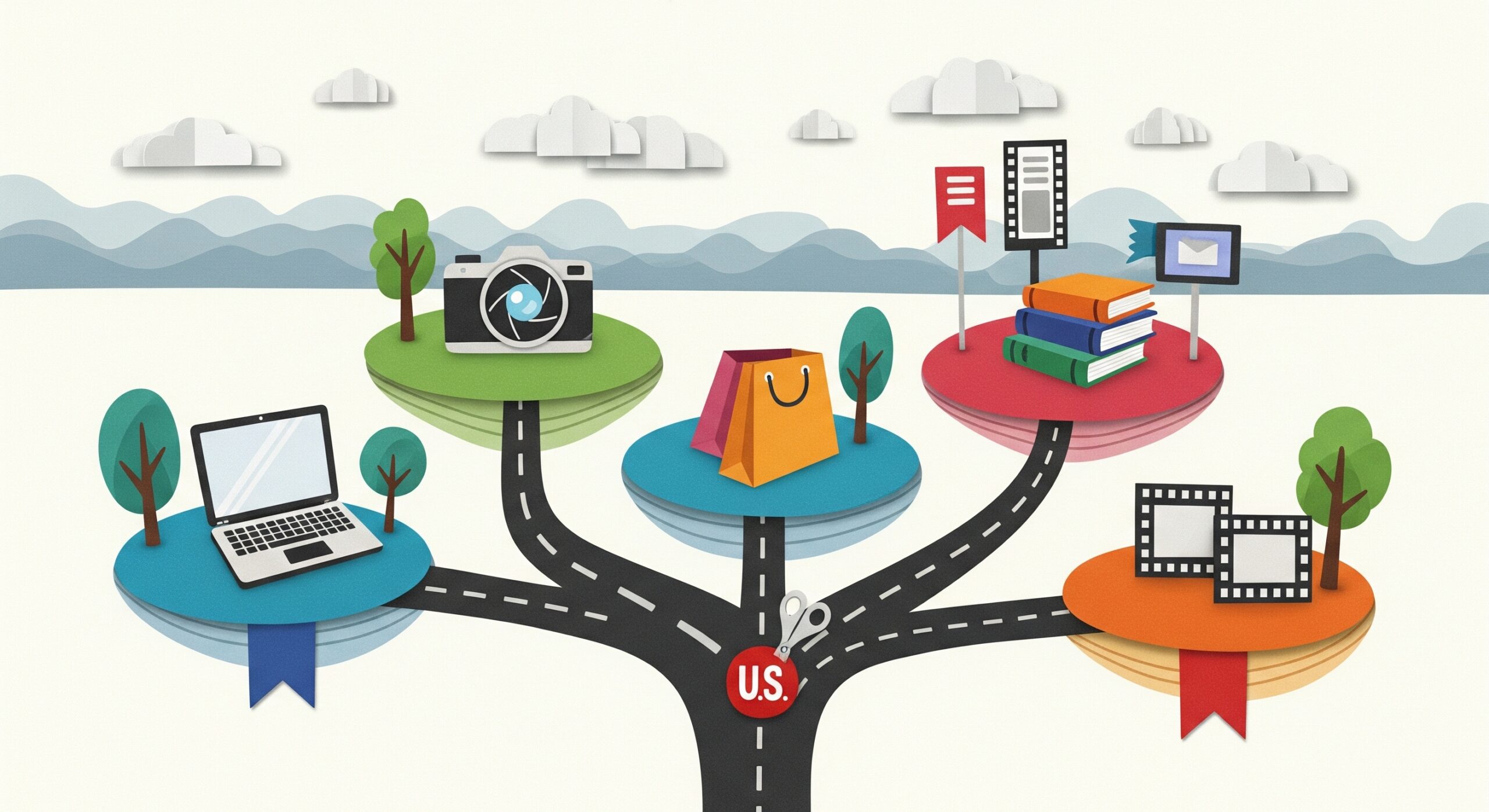
Most people think Google is the only search engine worth knowing about. That narrow view is costing them valuable time and missing specialized results that could transform their research. The digital world actually runs on dozens of categories of search engines, each designed for specific purposes and delivering wildly different results.
Ever wondered why your image searches feel clunky or why academic research takes forever to find the right papers? You’re probably using the wrong type of search engine. It’s like trying to cut steak with a butter knife – technically possible but unnecessarily painful.
Main Categories of Search Engines
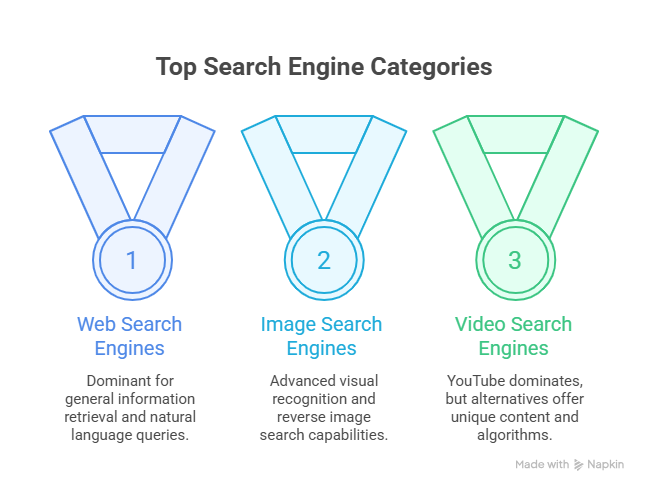
Web Search Engines
These are your workhorses – Google, Bing, DuckDuckGo. Web search engines crawl billions of pages and index them for text-based queries. They excel at general information retrieval and navigating the surface web. But here’s what drives me crazy: people treat them like universal tools when they’re actually terrible at specialized tasks.
The real power of web search engines lies in their ability to understand natural language queries and deliver contextual results based on your location and search history and device type, and even the time of day. They’re getting smarter. But they’re also getting more commercialized, with the top results increasingly dominated by ads and SEO-optimized content rather than genuinely helpful information.
Image Search Engines
Image search has evolved from simple keyword matching to sophisticated visual recognition. Google Images leads the pack, but specialized players like TinEye and Pinterest Visual Search offer unique capabilities. These engines can now identify objects within images, match similar visual patterns, and even understand artistic styles.
What separates great image search from mediocre ones? Reverse image capability. Upload a photo and find its source, similar images, or higher resolutions. Its basically magic for designers hunting down stock photos or researchers verifying image authenticity.
Video Search Engines
YouTube dominates this space so completely that people forget alternatives exist. Vimeo focuses on creative professionals, while Dailymotion serves international markets that Google barely touches. Each platform’s search algorithm prioritizes different factors – YouTube rewards engagement metrics while Vimeo emphasizes video quality.
The frustrating part about video search? Most engines still rely heavily on titles and descriptions rather than actual video content. Some newer platforms are experimenting with AI that can search spoken words within videos, but we’re still years away from truly comprehensive video search.
Meta Search Engines
Meta search engines are the Swiss Army knives of search – they query multiple search engines simultaneously and aggregate results. Dogpile, Searx, and MetaCrawler eliminate the echo chamber effect of single-source searching. They’re particularly valuable when you need diverse perspectives or when dealing with controversial topics where different engines might show different biases.
Think of meta search like asking five experts instead of one. You get broader coverage but potentially less depth. The trade-off is worth it when comprehensiveness matters more than precision.
Vertical Search Engines
Vertical search engines are where things get interesting. Amazon for products, Indeed for jobs, Zillow for real estate – these platforms understand their specific domains at a granular level that general search engines can’t match. They speak the language of their industry.
|
Vertical Category |
Leading Platform |
Key Advantage |
|---|---|---|
|
E-commerce |
Amazon |
Product reviews and pricing data |
|
Travel |
Kayak |
Real-time availability and price comparison |
|
Local Business |
Yelp |
User reviews and detailed business info |
|
Professional Networks |
|
Career-focused people search |
Academic Search Engines
Google Scholar changed the academic game by making research papers discoverable outside paywall gardens. But specialized engines like PubMed for medical research or JSTOR for humanities offer features that Scholar lacks: controlled vocabularies, citation tracking, and peer review filters.
The challenge with academic search isn’t finding papers – it’s finding the RIGHT papers. Quality indicators like journal impact factor and citation count help, but nothing beats understanding Boolean operators (AND, OR, NOT) for precise query construction.
Search Engine Classification by Function and Use
General Purpose vs Specialized Search
Here’s the truth most people miss: general-purpose search engines are becoming less useful as the internet grows. You wouldn’t use a world map to navigate your neighborhood, right? The same logic applies to search.
General-purpose engines excel at:
-
Broad informational queries
-
Current events and news
-
Quick fact-checking
-
Navigational searches (finding specific websites)
But specialized engines dominate when you need:
-
Industry-specific data and terminology
-
Filtered results within defined parameters
-
Historical or archived content
-
Professional-grade research tools
How Different Categories Serve User Intent
Search intent drives everything. Someone searching “pizza” on Google probably wants a nearby restaurant. That same search on Pinterest? They’re looking for recipes. On Instagram? Food photography inspiration.
The four main search intents map perfectly to different engine categories:
Navigational intent: Web search engines win here. They’re built to get you to specific destinations quickly.
Informational intent: Academic and specialized engines provide depth that general search lacks.
Transactional intent: Vertical search engines understand buying signals and commercial context.
Commercial investigation: Meta search engines help compare options across platforms.
Choosing the Right Search Engine Category
Stop defaulting to Google for everything. Start with this simple decision tree:
Need peer-reviewed research? Academic search engines. Looking for products? Go straight to vertical e-commerce search. Want multiple perspectives on controversial topics? Meta search is your friend.
The most underutilized trick? Combining search engine categories and their functions strategically. Use Google to find the right specialized engine, then dive deep with targeted searches there. I once found a rare technical manual by discovering an industry-specific database through Google, then searching within that specialized platform.
Understanding Search Engine Categories for Better Results
The explosion of specialized types of search engines isn’t slowing down. Voice search, AI-powered semantic search, and visual search are creating entirely new categories we’re just beginning to understand. The winners won’t be those who master one search engine – they’ll be those who understand when and how to leverage each category’s strengths.
Smart searchers build a toolkit. They know that search engine classification isn’t academic theory – it’s practical knowledge that saves hours of frustration. Whether you’re a researcher, marketer, or just someone trying to find better information online, understanding these categories transforms you from a casual searcher into a power user.
Ready to level up your search game? Start by identifying your three most common search needs and finding the specialized engine that serves each one. Your future self will thank you every time you skip past pages of irrelevant results to fin

Ridam Khare is an SEO strategist with 7+ years of experience specializing in AI-driven content creation. He helps businesses scale high-quality blogs that rank, engage, and convert.