

Ever wonder why some websites dominate search results while yours struggles to gain traction? The answer often lies in content gaps – those topics and keywords your competitors cover that you don’t. Finding and filling these gaps isn’t just about playing catch-up; it’s about strategically expanding your site’s authority and visibility. Let’s explore how to identify these opportunities and turn them into SEO wins.
Run a content gap analysis
Content gap analysis helps you discover what your audience is searching for that your website doesn’t address. This process reveals new ranking opportunities and strengthens your overall content strategy.
A content gap analysis is the strategic process of evaluating the difference between keywords for which you and your competitors rank in the search results.
— SEOclarity
List your core topics and keywords
Start by documenting what you already cover. This forms your content baseline:
- Pull your current rankings from Google Search Console
- List the primary topics and themes your business focuses on
- Group related keywords into clusters around central themes
- Note which buyer journey stages your existing content addresses
Create a simple spreadsheet with columns for topic categories, specific keywords, and current rankings. This organization makes patterns and opportunities much easier to spot later in your analysis.
Analyze top pages from key competitors
Your competitors’ successful content reveals what resonates with your shared audience:
- Identify 3-5 direct competitors in your space
- Look at their highest-ranking pages and most-shared content
- Pay special attention to content that ranks for multiple keywords
- Study their content structure, depth, and formatting approaches
Don’t just focus on direct business competitors – consider content competitors too. These might be publishers, resource sites, or blogs that rank for your target keywords without selling the same products or services.
Highlight topics you haven’t covered yet
Now comes the revealing part – spotting the actual gaps:
- Compare your topic list against competitor coverage
- Look for keywords where multiple competitors rank but you don’t
- Identify topic clusters where your content is thin compared to competitors
- Note keywords with high search volume that you’re completely missing
These gaps represent your biggest opportunities. The topics that appear repeatedly across competitor sites but are absent from yours deserve immediate attention.
Use competitor content analysis tools
While manual analysis works, specialized tools make content gap discovery faster and more thorough.
Try tools like Ahrefs and Semrush
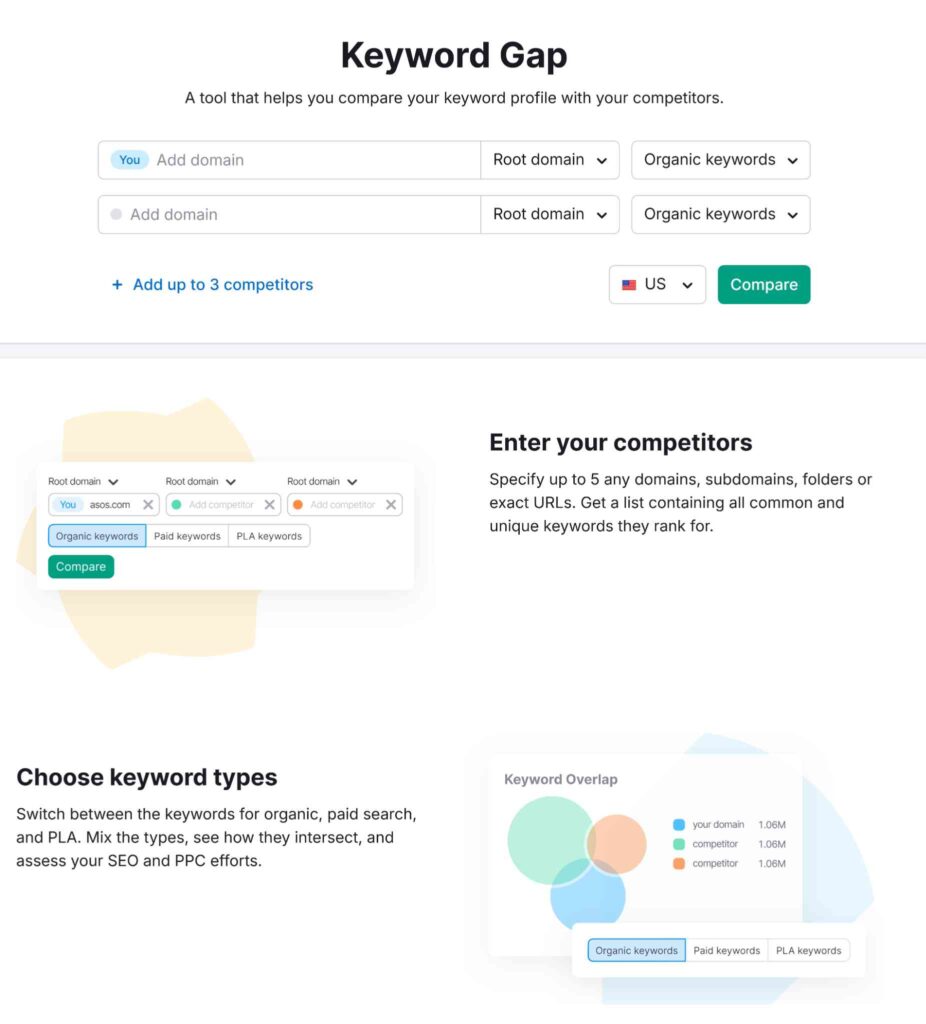
These platforms offer dedicated content gap features:
- Ahrefs: Use their Content Gap tool to find keywords competitors rank for that you don’t
- Semrush: Try the Keyword Gap tool to compare your domain against multiple competitors
- Surfer SEO: Analyzes content depth and suggests missing subtopics
- Clearscope: Helps identify semantically related terms you should include
Most of these tools offer free trials or limited free versions, so you can test them before committing to a subscription.
Compare keyword overlap and content depth
Look beyond just the keywords to understand content quality differences:
- Analyze word count and comprehensiveness between your content and competitors’
- Check for semantic richness and topic coverage using NLP-based tools
- Compare the number and quality of images, videos, and interactive elements
- Evaluate internal linking structures and how content pieces connect
Sometimes the gap isn’t about missing topics but about depth and quality. Your 500-word overview might struggle against a competitor’s 2,000-word comprehensive guide on the same subject.
Spot rankings your site is missing
Use tools to identify specific ranking opportunities:
- Filter for keywords where multiple competitors rank in the top 10
- Look for keywords with decent search volume but manageable difficulty
- Prioritize terms with commercial intent if you’re focused on conversions
- Check for featured snippet opportunities your competitors have captured
Focus especially on keywords where competitors rank but don’t seem to have particularly strong content. These represent your quickest wins.
Map a plan for filling content gaps
Now that you’ve identified gaps, create a strategic plan to address them systematically.
Group missing topics by funnel stage
Organize your content gaps based on where they fall in the buyer’s journey:
| Funnel Stage | Content Purpose |
|---|---|
| Awareness | Educational content that addresses pain points and questions |
| Consideration | Comparison content and solution-focused information |
| Decision | Product-specific content that facilitates conversions |
This organization helps you balance your content creation between immediate conversion opportunities and longer-term brand building topics.
Assign content formats that match intent
Different search queries call for different content types:
- How-to searches → Step-by-step guides or video tutorials
- Comparison queries → Comparison tables and feature breakdowns
- Definition searches → Glossaries and explanatory articles
- Problem-solving queries → Case studies and solution-focused content
Aligning format with intent makes your content more likely to satisfy searchers and earn rankings. A query like “content gap examples” might work best as a visual gallery, while “how to perform content gap analysis” needs a detailed guide.
Turn gaps into publish-ready content briefs
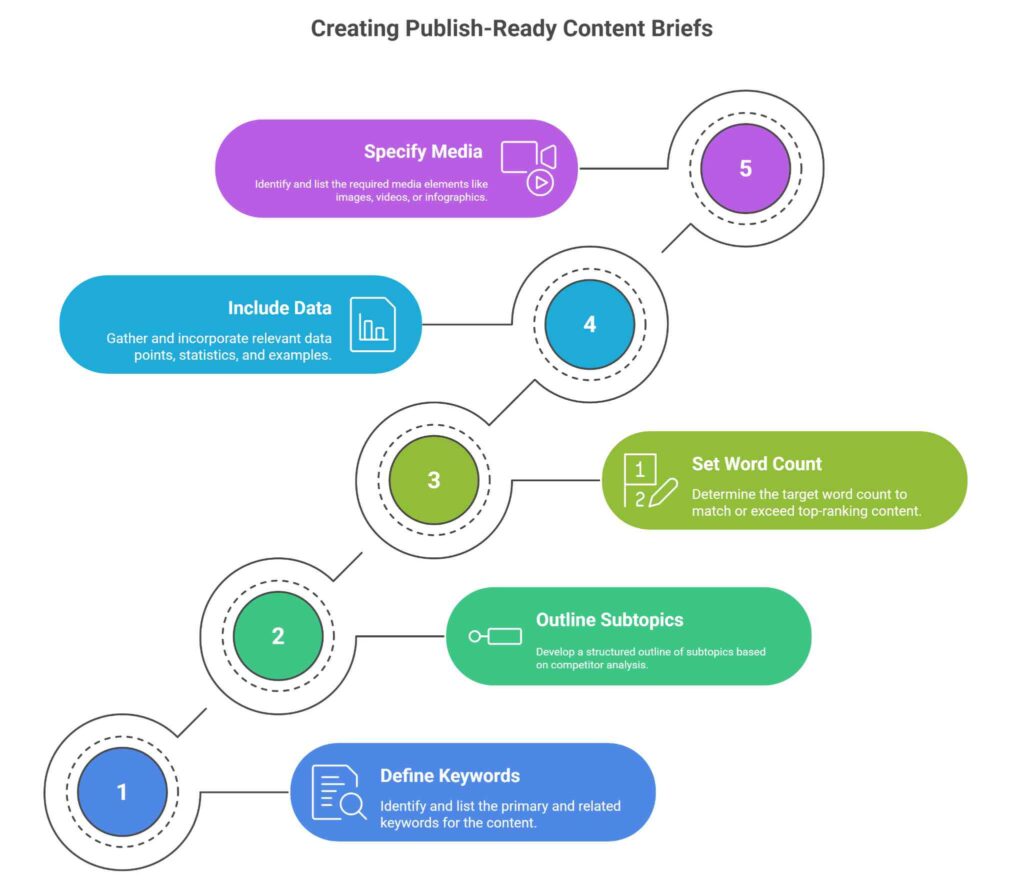
Create detailed content briefs that ensure your writers deliver gap-filling content:
- Define the primary keyword and related terms to include
- Outline the main subtopics based on competitor analysis
- Specify word count targets that match or exceed top-ranking content
- Include data points, statistics or examples that should be featured
- Note any specific media requirements (images, videos, infographics)
The more specific your briefs, the better your content will address the identified gaps. Include examples of competitor content that’s performing well as reference points.
Close SEO gaps and grow your keyword share
Finding content gaps is just the beginning – the real SEO benefits come from systematically filling them with high-quality, strategic content. By following the process outlined in this guide, you’ll not only catch up to competitors but potentially surpass them by creating more comprehensive, user-focused content.
Remember that content gap analysis isn’t a one-time task. As your competitors evolve their strategies and search behaviors change, new gaps will emerge. Make content gap analysis a regular part of your SEO routine, perhaps quarterly, to stay ahead of the curve and continuously expand your organic search presence.
Frequently Asked Questions
What is the role of content gap analysis in SEO?
Content gap analysis helps identify topics and keywords your competitors rank for that your site doesn’t address. This reveals opportunities to expand your content coverage, potentially increasing your organic visibility and traffic. It’s essentially a strategic method to discover untapped ranking opportunities while ensuring your content portfolio meets your audience’s complete information needs across their journey.
How is content optimization done after a content gap audit?
After identifying gaps, content optimization happens in two ways. First, create new content to address missing topics. Second, enhance existing content by adding sections that cover related subtopics, updating outdated information, improving depth and comprehensiveness, and restructuring to better match search intent. Both approaches should prioritize user experience while strategically incorporating target keywords.
What tools help with SEO competitive analysis and gap detection?
Several specialized tools excel at content gap analysis. Ahrefs and Semrush offer dedicated content gap features that compare keyword rankings across domains. Other helpful tools include Moz for keyword research, BuzzSumo for content performance analysis, and Clearscope or Surfer SEO for content optimization guidance. Google Search Console also provides valuable insights about queries where you’re appearing but not ranking well.
When should I redo competitor content analysis?
Content gap analysis should be conducted quarterly for most businesses to stay current with competitor strategies and search trends. However, more frequent analysis makes sense after major algorithm updates, when entering new markets, or when competitors launch significant site changes. Additionally, revisit your analysis when planning content calendars or updating existing content sections.
How long does it take for filling content gaps to show SEO results?
SEO improvements from filling content gaps typically begin appearing within 1-3 months, though full results can take 6-9 months to materialize. Quick wins often come from addressing gaps in high-intent keywords or improving thin content. More competitive terms take longer. Consistency is key – addressing multiple gaps systematically over time creates compounding benefits and helps establish topical authority that strengthens your overall SEO performance.

Ridam Khare is an SEO strategist with 7+ years of experience specializing in AI-driven content creation. He helps businesses scale high-quality blogs that rank, engage, and convert.