

Looking to make your mark in Russian search? While Google might dominate globally, Yandex rules the Russian market with over 40% market share. If you’re targeting Russian-speaking audiences, understanding the distinct differences between Yandex SEO and Google SEO isn’t just helpful – it’s essential for success. Let’s break down what makes Yandex tick and how you can optimize your site to perform well in this unique search environment.
In practice: comparing Google vs Yandex search results, they are a ~70% match.
— Alex Buraks
Key Ranking Differences Between Yandex and Google SEO
1. JavaScript Crawling and Indexing Capabilities
Yandex handles JavaScript differently from Google. While Google has made significant strides in rendering and crawling JavaScript-heavy sites, Yandex still lags behind in this department. Many dynamic elements on your page might go unnoticed by Yandex’s crawlers.
For best results with Yandex, keep crucial content in HTML format rather than relying on JavaScript to load important elements. If you run an SPA (Single Page Application), consider implementing server-side rendering or a pre-rendering solution specifically for Yandex bot visits.
2. Turbo Pages vs AMP for Mobile Optimization
Think of Turbo Pages as Yandex’s answer to Google’s AMP (Accelerated Mobile Pages). They serve the same purpose – delivering lightning-fast mobile experiences – but with different technical requirements. Turbo Pages uses Yandex’s own technology to create cached versions of your content that load instantly on mobile devices.
Unlike Google, where AMP is just one factor among many, Turbo Pages can significantly boost your visibility in Yandex mobile search results and are prominently featured with a lightning bolt icon. To implement Turbo Pages, you’ll need to create special RSS feeds that follow Yandex’s formatting guidelines. The extra effort pays off with better mobile rankings and potential traffic increases.
3. Regional Binding and Local Search Requirements
Yandex places much greater emphasis on regional targeting than Google. The search engine strongly favors sites that have clearly defined geographical targeting, especially for competitive search terms. You can specify your target regions in Yandex Webmaster Tools, but Yandex also determines regional relevance through:
• Contact information with local addresses and phone numbers
• Regional domain extensions (.ru, .ua, etc.)
• Server location
• Currency used on the site
• Language of content
For businesses targeting specific Russian regions or cities, proper regional binding is not optional – it’s essential for visibility.
4. User Behavior Signals and CTR Impact
Both Yandex and Google consider user behavior, but Yandex puts significantly more weight on user interaction metrics. Click-through rate (CTR), time on site, bounce rate, and user satisfaction all play crucial roles in Yandex rankings. Yandex has openly acknowledged using its browser data and Metrica analytics (Yandex’s equivalent to Google Analytics) to evaluate how users interact with search results.
Sites that consistently satisfy users with engaging content that answers their queries tend to rank higher in search engine results. This means crafting compelling meta titles and descriptions isn’t just good practice – it’s a direct ranking factor that can dramatically impact your visibility.
To see exactly how Yandex weights behavioural data, check out our detailed breakdown of the Yandex SEO ranking factors in 2025.
5. Content Quality Requirements and Keyword Density
Yandex evaluates content quality differently from Google. While Google has shifted its focus toward understanding semantic meaning and user intent, Yandex continues to place greater emphasis on traditional keyword usage patterns. Yandex tends to favor:
• Content with moderate keyword density (around 1-3%)
• Logical keyword placement in important HTML elements
• Original content with proper grammar and spelling
• Comprehensive coverage of topics.
However, don’t mistake this for a green light to keyword stuff. Yandex’s algorithms have grown increasingly sophisticated at detecting manipulation tactics.
6. Indexing Speed and Force Crawling Options
Yandex typically indexes new content more slowly than Google. While Google might discover and index new pages within hours, Yandex can take days or even weeks, especially for new websites without established authority.
Thankfully, Yandex Webmaster Tools offers a “force crawling” option that lets you submit specific URLs for immediate crawling. This feature is particularly useful for time-sensitive content or urgent fixes to existing pages. For regular indexing, maintaining a clean site structure with logical internal linking remains your best strategy for helping Yandex efficiently crawl your site.
7. Backlink Weight and Link Building Approach
Both search engines value backlinks, but Yandex applies a different evaluation model. Yandex puts higher value on:
• Links from sites within the same region or language
• Links from topically relevant sites
• Links from domains with an established history
• Natural anchor text distribution.
Yandex is also stricter about link schemes. Their Minusinsk algorithm specifically targets sites buying links, and penalties can be severe. Focus on earning genuine, relevant backlinks from Russian-language sites for maximum benefit.
8. Penalty Recovery Time and Algorithm Strictness
When it comes to penalties, Yandex doesn’t play around. While Google penalties can often be addressed with quick fixes followed by reconsideration requests, Yandex penalties typically last longer and provide less specific guidance about violations.
Yandex’s AGS filter (their equivalent to Google’s Panda) targets low-quality content, while their Minusinsk filter punishes unnatural link building. Recovery from these penalties often takes months rather than weeks, making preventative compliance even more important.
Essential Yandex SEO Tools and Webmaster Resources
Setting Up Yandex Webmaster Tools Account
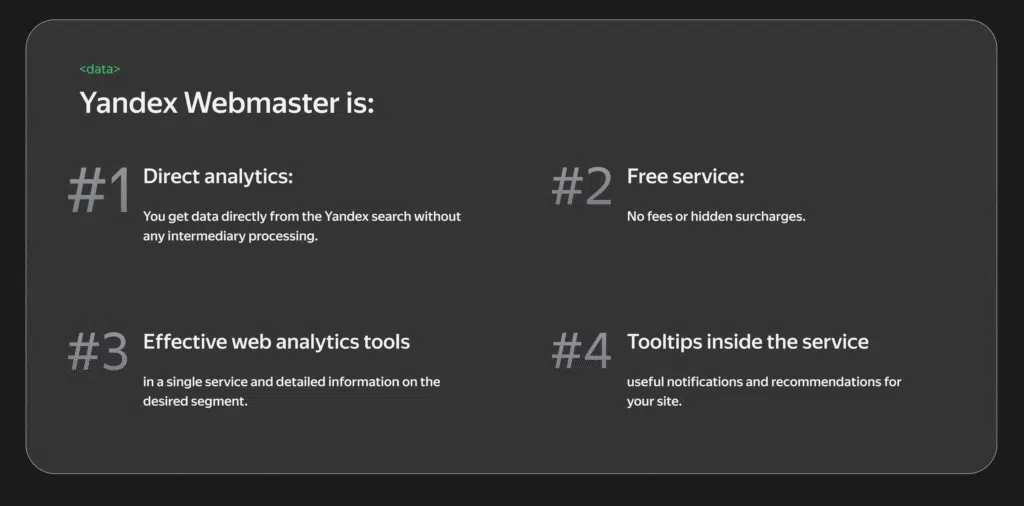
Your Yandex SEO journey begins with Yandex Webmaster Tools – the command center for managing your site’s presence in Yandex search results. Creating an account is straightforward: register at webmaster.yandex.com, add and verify your site ownership, and you’ll gain access to valuable data and controls.
The dashboard provides insights into indexing status, search traffic, and technical issues. Unlike Google’s Search Console, Yandex Webmaster Tools offers more direct control over how the search engine interacts with your site, including options to manage regional targeting and crawling preferences.
Mobile Compatibility Checker Features
Yandex takes mobile optimization seriously, and their mobile compatibility checker helps identify issues that might affect your site’s performance on smartphones and tablets. The tool evaluates:
• Touch element spacing and size
• Viewport configuration
• Content scaling
• Font readability
• Mobile rendering issues
The checker provides specific recommendations with screenshots showing how Yandex sees your mobile pages, making it easier to spot and fix problems that might hurt your mobile rankings.
Sitemap Submission and Validation Tools
Yandex’s sitemap tools go beyond basic submission functionality. You can upload multiple sitemap formats (XML, RSS, Text) and track detailed statistics about how Yandex processes each one. The platform shows:
• When each sitemap was last processed
• How many URLs were found
• How many were actually indexed
• Specific errors by URL
This granular data helps identify patterns of indexing problems and prioritize fixes for maximum impact.
Site Quality Index Monitoring Dashboard
Yandex’s quality index (IKS score) represents their assessment of your site’s overall quality and authority. Unlike Google’s mostly hidden quality assessments, Yandex provides this score directly in Webmaster Tools. The higher your IKS score, the more Yandex trusts your site. While the exact calculation formula remains proprietary, the score typically improves with:
• More quality backlinks
• Increased user engagement
• Content freshness
• Technical health improvements
Monitoring your IKS score provides valuable feedback about how Yandex perceives your site’s authority over time.
Structured Data and Schema Testing Tools
Yandex supports many of the same schema.org markup types as Google, but with some unique preferences. Their structured data validator helps ensure your implementation meets Yandex’s specific requirements. Particularly valuable for Yandex rankings are:
• Organization markup
• Local business markup
• Product and pricing schema
• FAQ content markup
Properly implemented structured data can earn you enhanced listings in Yandex search results, improving click-through rates and visibility.
DNS Record and Meta Tag Verification Methods
Yandex offers multiple verification methods to prove site ownership:
• HTML file upload
• Meta tag insertion
• DNS record addition
• Yandex.
Metrica counter installation. The DNS verification method is particularly useful for managing multiple subdomains efficiently, while the meta tag approach requires minimal technical intervention. Once verified, you gain access to the full suite of webmaster tools and can authorize additional users to help manage your site’s Yandex presence.
Top Yandex SEO Consultant Selection Criteria
When selecting a Yandex SEO consultant, look beyond general SEO expertise. Key qualifications should include:
• Native or fluent Russian language skills
• Demonstrated experience with Yandex Webmaster Tools
• Understanding of regional targeting in Russian markets
• Familiarity with Yandex-specific ranking factors
• Case studies showing Yandex ranking improvements
The best consultants stay current with Yandex’s frequent algorithm updates and can navigate the unique cultural and linguistic nuances of Russian search behavior.
Optimizing for Yandex vs Google: Key Takeaways
Success in Yandex SEO requires recognizing and adapting to its unique approach. While Google increasingly focuses on user intent and content quality, Yandex still values more traditional SEO signals alongside user behavior metrics. For the best results across both platforms:
• Create high-quality, original content that satisfies user needs
• Build a technically sound website that loads quickly on all devices
• Earn natural backlinks from relevant, trusted sources
• Implement proper regional targeting if focusing on Russian markets
• Monitor performance in both search engines’ webmaster tools
Remember that Yandex isn’t just a Russian Google clone – it’s a distinct search ecosystem with its own rules and requirements. Taking time to understand these differences will give you a significant advantage over competitors who simply apply Google SEO tactics to Yandex campaigns.
FAQs
How long does Yandex take to index new websites compared to Google?
Yandex typically takes longer to fully index new websites – often 2-4 weeks for complete indexing compared to Google’s days or sometimes hours. New sites should submit their sitemap through Yandex Webmaster Tools and use the “force crawl” feature for important pages. Established sites with good authority may see faster indexing, but Yandex generally moves more cautiously than Google when assessing new content.
Can I use the same SEO strategy for both Yandex and Google?
While there’s some overlap, a one-size-fits-all approach won’t maximize results on both platforms. Core differences include Yandex’s stronger emphasis on regional targeting, different approaches to JavaScript rendering, and unique tools like Turbo Pages instead of AMP. The fundamental principles of quality content and good technical SEO apply to both, but implementation details and prioritization should be tailored to each search engine’s specific requirements.
What are the most important Yandex ranking factors in 2025?
The most critical Yandex ranking factors in 2025 include: proper regional targeting, user behavior metrics (especially CTR and time-on-site), content relevance with appropriate keyword usage, website loading speed, mobile optimization through Turbo Pages, and quality backlinks from relevant Russian sites. Technical factors like secure HTTPS implementation and clean HTML structure continue to gain importance as Yandex refines its algorithms.
Do I need separate content for Yandex and Google optimization?
In most cases, you don’t need completely separate content, but strategic adaptations can help. If targeting Russian-speaking users, native Russian content will naturally perform better in Yandex than translated material. For multilingual sites, proper hreflang implementation and region-specific content adjustments are recommended. Focus on adapting your existing content strategy rather than creating entirely separate content versions for each search engine.
Which Yandex webmaster tools features are most critical for SEO success?
The most valuable Yandex Webmaster Tools features include: regional site binding settings, the site quality index (IKS) monitor, Turbo Pages implementation tools, the URL inspection and force crawl function, and the “Browse as Yandex” feature that shows exactly how the search engine sees your pages. The external links report and security issues scanner also provide critical insights that directly impact your rankings and visibility in Yandex search results.

Ridam Khare is an SEO strategist with 7+ years of experience specializing in AI-driven content creation. He helps businesses scale high-quality blogs that rank, engage, and convert.