
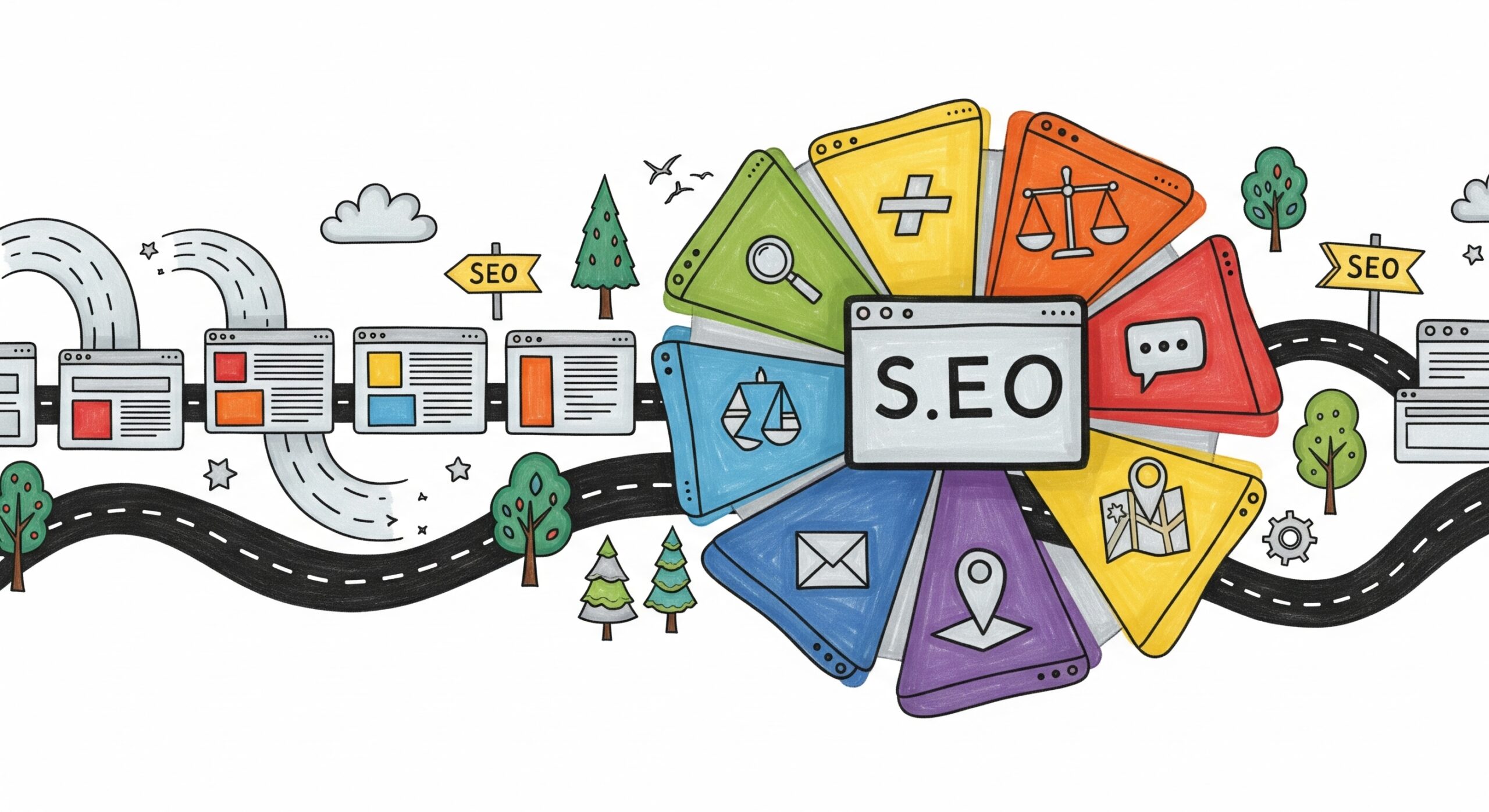
Everyone thinks programmatic SEO is about spinning up thousands of pages with templates and watching the traffic roll in. That misconception has killed more SEO campaigns than algorithm updates ever could. The truth is messier – programmatic SEO done right requires obsessive attention to data quality and user intent patterns that most teams completely overlook.
What is Programmatic SEO?
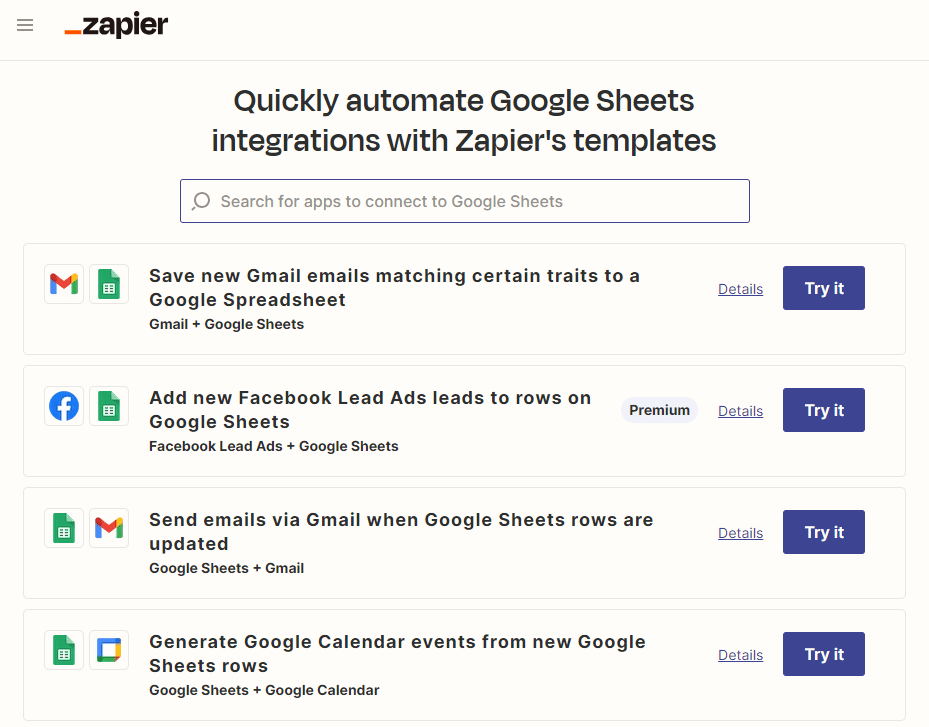
Programmatic SEO lets you create hundreds or thousands of targeted landing pages by combining structured data with content templates. Think of it like building with LEGOs instead of sculpting marble – you’re assembling pre-designed pieces at scale rather than crafting each page by hand. Zapier does this brilliantly with their integration pages, creating unique content for every possible app combination.
The real magic happens when you nail the data-to-template relationship. Your database becomes the brain, templates become the voice, and suddenly you’re publishing content faster than traditional teams can outline a single article. How to execute programmatic SEO successfully means understanding this relationship at a granular level.
The Importance of Programmatic SEO
Picture this: while your competitor spends three weeks crafting one “ultimate guide,” you’ve published 500 location-specific service pages that capture long-tail searches they never even thought about. That’s the leverage programmatic SEO provides. It’s not replacing quality content – it’s dominating the spaces where manual creation doesn’t scale.
But here’s what drives me crazy – teams rush to build thousands of pages without first proving their template works for ten. You end up with what I call “zombie farms” – massive collections of thin pages that Google increasingly penalizes. The sites winning with a programmatic SEO strategy focus on depth within constraints, not just raw page count.
Step-by-Step Programmatic SEO Workflow
1. Conduct Keyword Research at Scale
Forget your traditional keyword research tools for a minute. Programmatic SEO demands pattern recognition, not individual keyword hunting. Start by pulling search console data for your existing pages and look for query patterns with consistent modifiers. You’re hunting for formulas like “[service] + [location]” or “[product] vs [competitor]” that repeat across hundreds of variations.
The goldmine sits in Google’s autocomplete and “People Also Ask” sections. Scrape these at scale using tools like Ahrefs or SEMrush’s API, then use regex patterns to identify the modifier combinations that appear most frequently. I’ve found that 80% of programmatic opportunities follow just 3-5 core patterns. Find yours.
2. Identify Head Terms and Modifiers
Your head terms are the foundation – these are the core concepts your audience searches for. Modifiers are the variables that create unique intent. For a real estate site, “homes for sale” might be your head term, while “under 500k,” “with pool,” or “near schools” become your modifiers.
| Head Term | Primary Modifiers | Secondary Modifiers | Potential Pages |
|---|---|---|---|
| CRM software | for [industry] | under [price] | 500+ |
| Email templates | for [situation] | [formal/casual] | 300+ |
| Workout plans | for [goal] | [duration] weeks | 200+ |
The mistake everyone makes? Combining modifiers that don’t have search volume. Test each combination in your keyword tools before committing to the build.
3. Create and Validate Content Templates
Templates are where programmatic SEO automation lives or dies. Build your first template manually for your highest-value keyword combination. Include dynamic sections for data insertion but write the connecting tissue like you’re explaining it to a smart friend. Your template needs enough variability to avoid duplicate content flags but enough consistency to maintain quality.
Here’s the validation part most skip: publish 10-20 pages manually using your template before automating anything. Monitor their performance for at least two weeks. If these test pages don’t rank or convert, your template needs work. Period.
4. Build Your Database Infrastructure
Your database is the engine of your programmatic SEO workflow. Structure it with columns for every dynamic element in your template – titles, descriptions, data points, images, even internal links. Most teams use Airtable or Google Sheets to start, but you’ll quickly need something more robust like PostgreSQL or MySQL for serious scale.
“The difference between programmatic SEO that works and programmatic SEO that fails comes down to data quality. Garbage in, garbage out – except at scale, that garbage becomes a penalty risk.”
Set up validation rules for every field. Minimum character counts, required fields, format specifications – treat your database like a production system from day one. Trust me on this one.
5. Implement Schema Markup
Schema markup tells Google exactly what your programmatically generated pages contain. For local pages, use LocalBusiness schema. For product comparisons, use Product schema. This isn’t optional – it’s the difference between Google understanding your pages and treating them as thin content.
Automate schema generation alongside your content. Your template should include JSON-LD markup that pulls from the same database fields as your visible content. Keep it consistent and test every variation with Google’s Rich Results Test tool.
6. Publish and Monitor Performance
Start small. Seriously. Publish 50-100 pages in your first batch, then wait. You’re watching for indexation rate, ranking positions, and most critically – user engagement metrics. If bounce rates spike or dwell time tanks, stop everything and fix your templates.
Set up dedicated dashboards in Google Analytics and Search Console for your programmatic pages. Track them separately from your manual content. You need to know exactly how this programmatic SEO strategy performs compared to traditional efforts. The data might surprise you.
Essential Programmatic SEO Tools and Platforms
AI-Powered Content Generation Tools
The new wave of AI tools has revolutionized programmatic content creation, but don’t use them as a crutch. Tools like Jasper AI and Copy.ai excel at generating variable sections within your templates – product descriptions, location-specific intros, feature comparisons. The key is using them for variation, not core content.
What actually works: Use AI to generate 5-10 variations of each template section, then A/B test them across your pages. Let performance data tell you which variations resonate. This approach has consistently beaten single-template strategies by 30-40% in my tests.
Database and CMS Integration Platforms
Webflow, WordPress with custom fields, or Sanity.io – pick your poison based on technical expertise. Webflow’s CMS collections are perfect for non-technical teams, while WordPress with ACF gives you infinite flexibility. For enterprise scale, headless CMS options like Contentful or Strapi let you separate content management from presentation entirely.
- Webflow: Visual builder with built-in CMS collections (best for 1-10k pages)
- WordPress + ACF: Maximum flexibility with moderate technical requirement
- Sanity/Contentful: API-first approach for true scale (10k+ pages)
- Custom builds: Next.js or Gatsby for complete control
Keyword Research Tools for Pattern Discovery
Ahrefs’ Keywords Explorer remains unmatched for pattern discovery. Export massive keyword lists, then use their filtering options to identify modifier patterns. SEMrush’s Keyword Magic Tool works similarly but excels at finding question-based patterns. Don’t sleep on free tools either – Google’s Keyword Planner still reveals patterns competitors miss.
The real secret? Combine tools. Pull initial patterns from Ahrefs, validate search volume in Google Keyword Planner, then check SERP features in SEMrush. This triple-check approach prevents you from building pages for keywords Google treats differently than you expect.
No-Code Automation Solutions
Zapier and Make (formerly Integromat) have become essential for programmatic SEO workflows. Connect your database to your CMS, trigger page creation from spreadsheet updates, even automate internal linking patterns. The best part – no coding required.
My favorite workflow: Airtable database → Make.com automation → Webflow CMS → Instant page publication. You can build and deploy 100 pages in the time it takes to write this sentence. Well, almost.
Building a Scalable Programmatic SEO Strategy
Selecting High-Intent Keyword Patterns
High-intent patterns have commercial or transactional modifiers built in. Think “buy,” “price,” “cost,” “review,” or “best” combined with your core terms. These convert at 3-5x the rate of informational queries. Focus here first.
Study your paid search data if you have it. The keyword combinations profitable enough for PPC are usually perfect for programmatic SEO. You’re essentially building organic landing pages for keywords you’d otherwise pay for. Smart, right?
Creating Quality Content at Scale
Quality at scale sounds like an oxymoron, but it’s not. The trick is investing heavily in your template quality upfront. Spend a week perfecting one template instead of rushing to build ten mediocre ones. Include unique value propositions, real data points, helpful comparisons – everything a manually created page would have.
Layer in user-generated content where possible. Reviews, ratings, Q&A sections – these elements add uniqueness to every page without additional effort. TripAdvisor and Yelp have mastered this approach.
Avoiding Common Pitfalls and Google Penalties
The fastest way to a Google penalty is publishing thousands of near-duplicate pages simultaneously. Google’s algorithms can smell programmatic content from miles away if you’re sloppy. Vary your title tags beyond just swapping keywords. Include unique images. Stagger your publishing schedule.
Never – and I mean never – create pages for keyword combinations with zero search volume. “Red widgets for left-handed dentists in Alaska” might be a unique page, but it’s also useless. Every page needs to serve real search intent or you’re just creating digital pollution.
Measuring ROI and Performance Metrics
Track these metrics religiously:
| Metric | Target | Warning Sign |
|---|---|---|
| Indexation Rate | >90% | <70% |
| Organic CTR | >2% | <0.5% |
| Bounce Rate | <60% | >80% |
| Pages per Session | >1.5 | <1.2 |
| Conversion Rate | Match or beat manual pages | 50% below manual pages |
Calculate your cost per page (template development + data + publishing) and compare it to the lifetime value of organic traffic. Most successful programmatic campaigns see ROI within 3-6 months. If you’re not there by month six, something’s fundamentally broken.
Examples of Good Programmatic SEO (with Explanations)
1. Zapier
Let’s examine the masters. Zapier has created over 50,000 app integration pages, each targeting searches like “connect [App A] to [App B].” Their genius? Each page includes real integration instructions, use cases, and user reviews. It’s programmatic but incredibly useful.
2. TripAdvisor
TripAdvisor dominates “things to do in [city]” searches with programmatically generated guides. They combine user reviews, photos, and booking widgets with location-specific content. The result feels curated despite being largely automated.
For Example, take Las Vegas:

Similar pages are created for Los Angeles too:

3. Canva
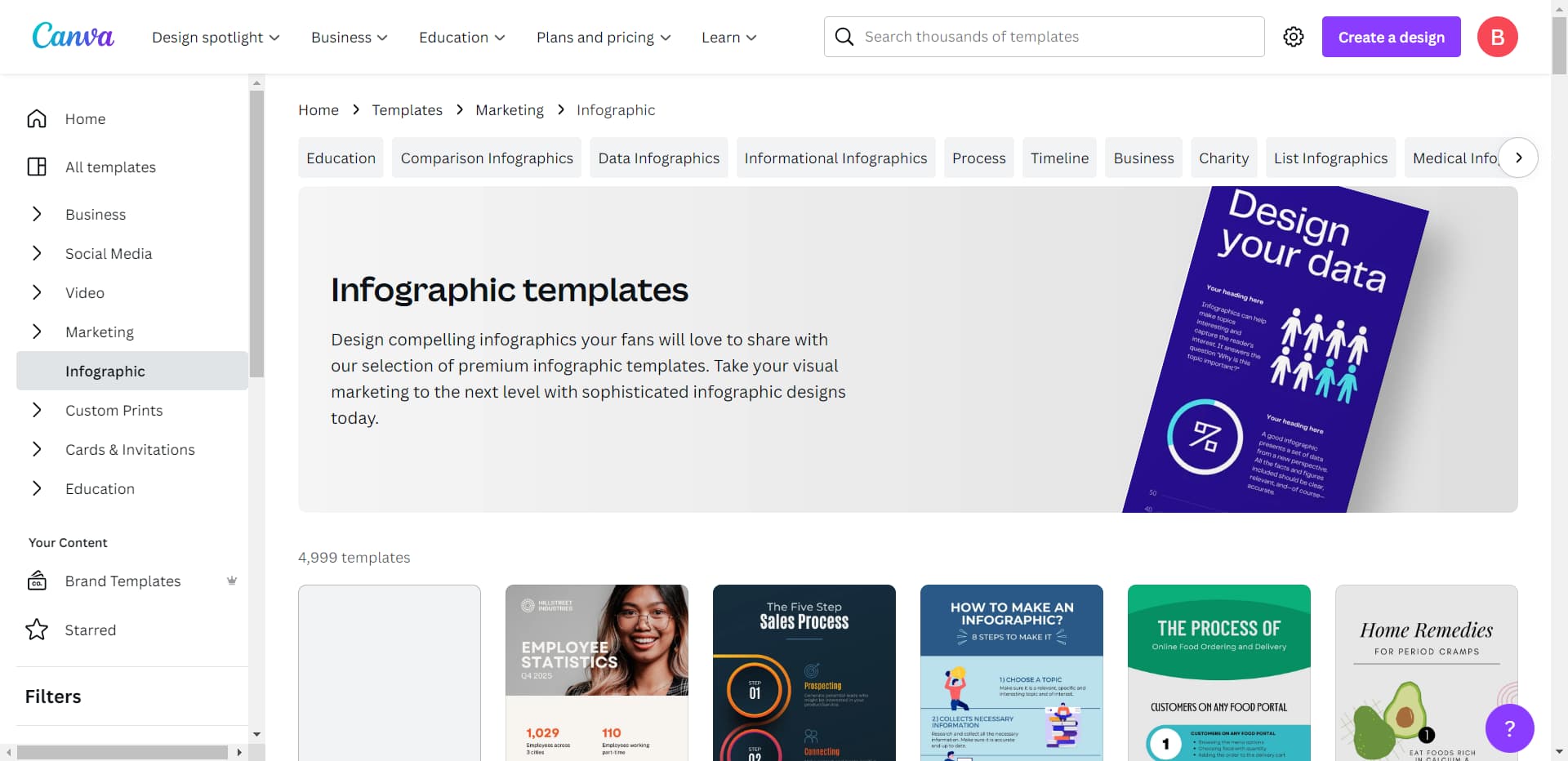
Canva’s template gallery showcases programmatic SEO examples at their finest. Thousands of pages for searches like “[document type] template [style/purpose]” – each with real, usable templates. They solved the value problem that trips up most programmatic efforts.
4. G2
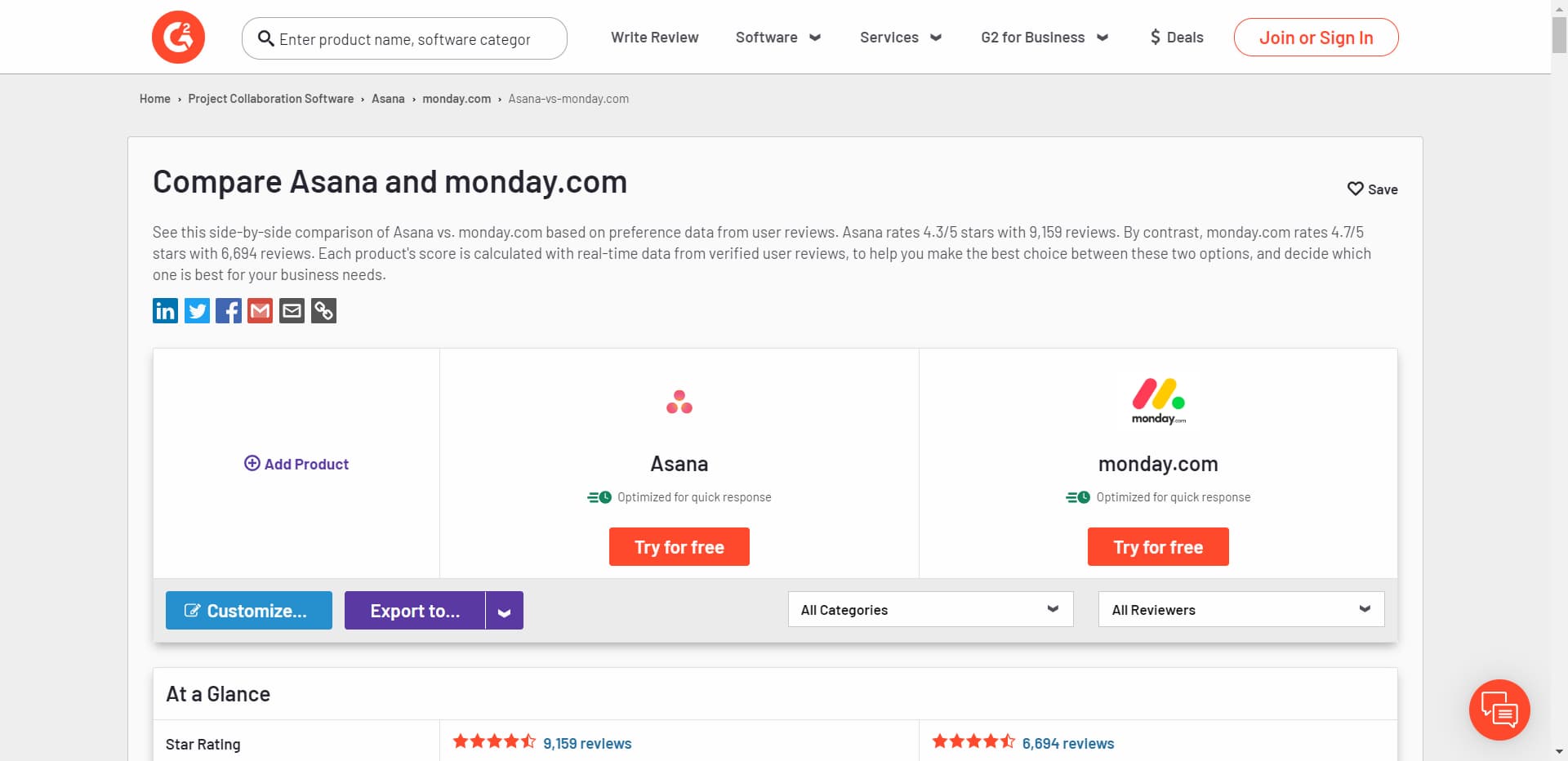
G2’s software comparison pages target “[Software A] vs [Software B]” searches perfectly. Automated data collection, user reviews, and feature comparisons create pages that often outrank the vendors themselves. That’s the power of programmatic SEO done right.
Traditional SEO vs. Programmatic SEO
Traditional SEO is like farming – you carefully tend each piece of content, nurturing it to perfection. Programmatic SEO is industrial agriculture – systematized, scalable, efficient. Neither is inherently better. They serve different purposes.
Traditional SEO wins for:
- Complex, nuanced topics requiring expertise
- Brand-building and thought leadership content
- Highly competitive head terms
- Content requiring original research or unique perspectives
Programmatic SEO dominates for:
- Location-based searches with similar intent
- Product or service comparisons at scale
- Database-driven content (stats, listings, directories)
- Long-tail keywords with clear patterns
The smart play? Use both. Let programmatic SEO capture the long tail while your manual content targets high-value head terms. Think of it as your content portfolio – diversification reduces risk and maximizes opportunity.
Mastering Programmatic SEO Implementation
Success with programmatic SEO comes down to execution discipline. Start with proven patterns, validate with small batches, then scale what works. The teams crushing it right now aren’t the ones with the most pages – they’re the ones with the best data quality and user experience.
Your next step is clear: identify one high-intent keyword pattern in your niche, build a killer template for it, and test with 20-50 pages. Don’t overthink it. The worst thing you can do is spend months planning without publishing anything. Start small, learn fast, scale smart.
Remember, how to execute programmatic SEO successfully isn’t about gaming Google. It’s about serving user intent at a scale that manual creation can’t match. Focus on value, and the rankings follow. Focus on rankings alone, and you’ll join the graveyard of penalized sites ,wondering what went wrong.
FAQs
What is the minimum budget needed to start programmatic SEO?
You can start programmatic SEO with as little as $500-1000 per month. Use Google Sheets for your database, WordPress for your CMS, and Zapier for basic automation. The real investment isn’t money – it’s time spent perfecting your templates and data structure. I’ve seen bootstrapped startups outperform six-figure campaigns because they focused on quality over tools.
How many pages should I create in my first programmatic SEO campaign?
Start with 50-100 pages maximum. This gives you enough data to identify patterns without risking penalties if something goes wrong. After monitoring performance for 4-6 weeks, scale in increments of 200-500 pages. Never jump straight to thousands – that’s a recipe for disaster.
Which CMS platforms work best for programmatic SEO automation?
Webflow leads for visual builders with its CMS Collections feature. WordPress with Custom Post Types and ACF remains the most flexible option. For true scale (10,000+ pages), consider headless options like Sanity, Strapi, or Contentful paired with Next.js or Gatsby. The best platform is the one your team can actually maintain.
How long does it take to see results from programmatic SEO?
Initial indexation happens within 1-2 weeks if your technical SEO is solid. Rankings typically appear after 4-8 weeks, with meaningful traffic building around the 3-month mark. Full ROI usually takes 4-6 months. If you’re not seeing any movement by month three, your templates likely need major revision.
Can programmatic SEO work for small businesses without technical expertise?
Absolutely. No-code tools have democratized programmatic SEO. Combine Airtable for data management, Webflow or WordPress for publishing, and Zapier for automation. You can build a sophisticated programmatic SEO system without writing a single line of code. The key is starting simple and gradually adding complexity as you learn what works for your niche.

Ridam Khare is an SEO strategist with 7+ years of experience specializing in AI-driven content creation. He helps businesses scale high-quality blogs that rank, engage, and convert.